Father’s Farm: A Brother Knows Who You Are, But a Father Knows Who You Can Become
Thursday, 26 Mar 2026
This isn’t your typical graduation.
There are no caps or gowns, no excited parents corralling kids together for group photos, and no grand plans being made about summer trips or move-in dates for college in the fall. No, this is a different kind of graduation, a celebration not of academic accomplishment but of second chances. Or, in Ray’s case, maybe third, fourth, or fifth chances.
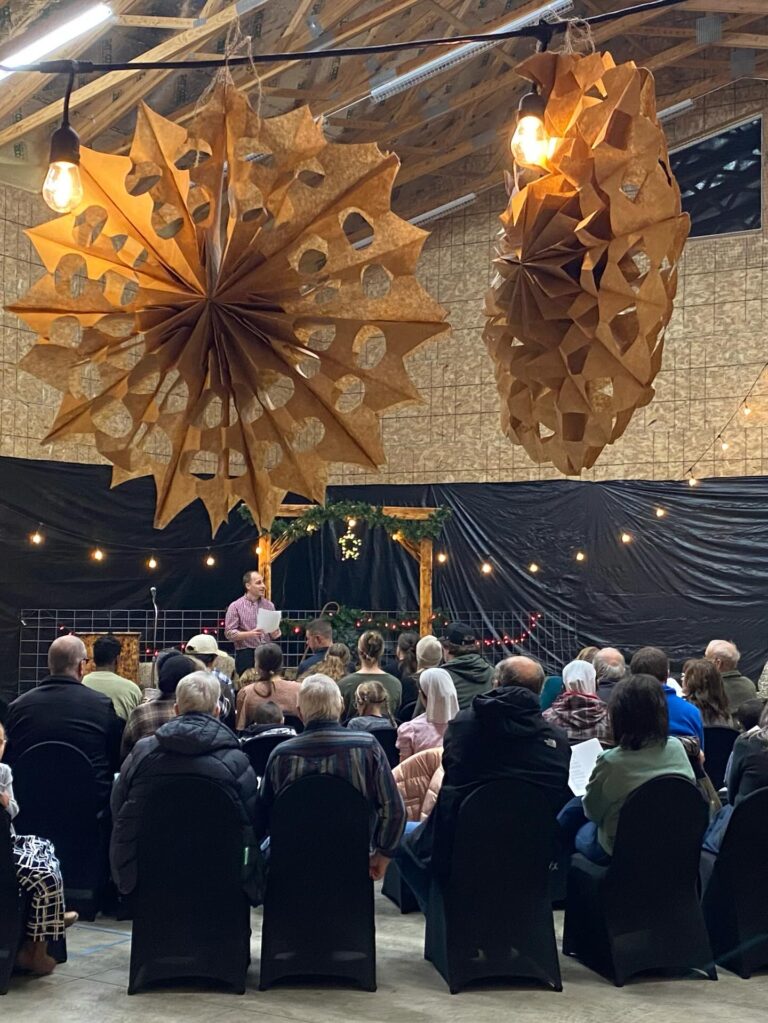
The only graduate at tonight’s ceremony, Ray is the man of the hour, and he’s the guy who these couple dozen people — seated in wooden chairs in a makeshift auditorium — are here to celebrate as he marks the completion of his year-long stay at Father’s Farm.
A 54-year-old ex-con who found his way to western North Dakota during the Bakken oil boom, Ray’s the kind of guy who could never get out of his own way. A drifter who spent his adult life in the throes of addiction and in and out of prison, in early 2025, he decided he’d finally had enough.
“He came out here and wanted to surrender his life to the Lord and stop doing things his old way,” says Chet Yoder, who’s leading tonight’s ceremony. “His old way was not working — clearly — and he wanted to do things in a brand new way. And he was ready and willing to change.”
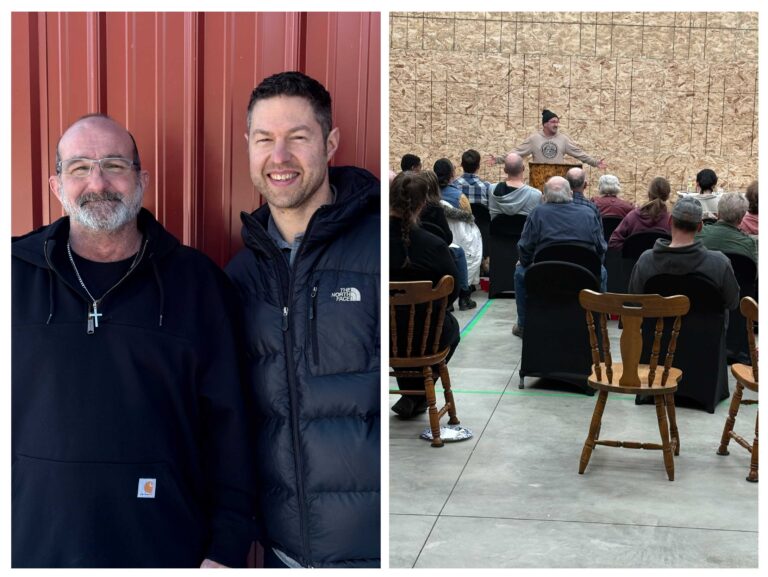
Left photo: Ray (left) with Father's Farm Executive Director Chet Yoder (right). Chet took over as executive director of the farm about three years ago, after moving back to the area from the West Coast and leaving his profession as a physical therapist. "God just made it really clear to us that we were supposed to be part of what was going on here." Chet lives on the farm with his wife and two adopted sons, all four of whom are active in the day-to-day operation of the organization. Right photo: Members of the Wolford and Mylo, North Dakota, communities gather in early March to celebrate Ray's graduation from Father's Farm.
Yoder is the executive director of Father’s Farm — a nonprofit rehabilitation center for men located just outside of Wolford, a town of less than 50 people in north central North Dakota — and for the three years he’s been on the job, he’s been something of a father figure to Ray and to the handful of other guys who have come to the farm.
Father’s Farm, which was officially founded in 2017, started as an outreach program in the Rugby, North Dakota, jail in 2009. Chet’s father, Cleo Yoder, and local pastor Dan Slaubaugh — along with their wives — were invited to get involved with about 100 inmates at the Heart of America Correctional and Treatment Center. The group would spend about three hours each Sunday morning and four hours each Wednesday night meeting with the men, listening to their stories, and providing faith-based guidance and counseling.
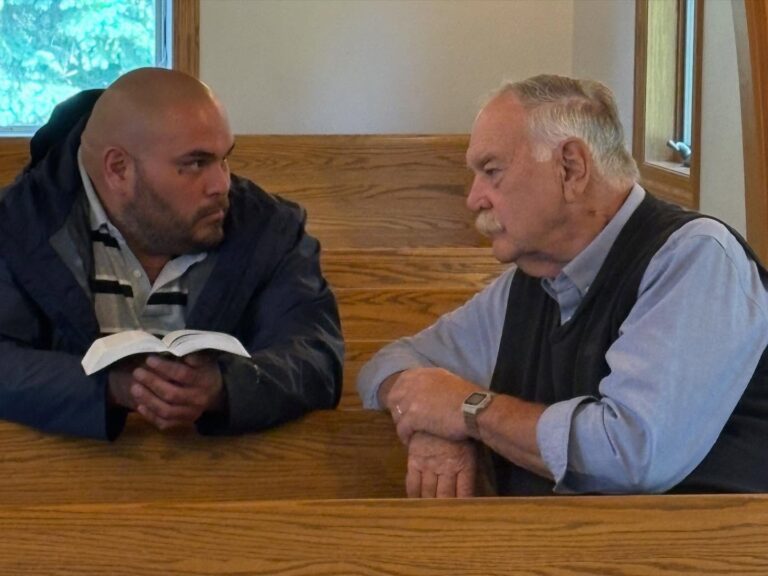
“That was kind of the root of seeing the hearts of a lot of these guys and beginning to be concerned about them,” says Cleo, who speaks with a calm, reassuring demeanor befitting a pastor and spiritual mentor. “And whenever somebody wanted to visit individually and do some real personal work, then we would make time for that. But then what happened was we started to ask ourselves: What happens to these guys when they leave here? And so it was out of (the outreach program) — along with Dan’s desire to do something (more permanent) — that this whole thing emerged.”
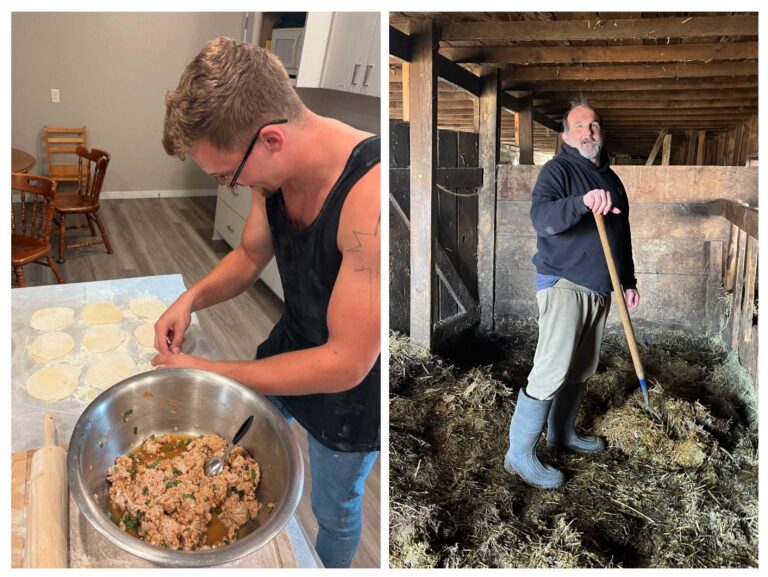
The men at Father's Farm learn both life skills, as well as what it means to maintain and operate a real farmstead.
While there’s nothing else in the area quite like Father’s Farm, you can think of it like a counseling center meets farmstead meets church. The organization sits on 23 acres of land in one of the most rural parts of an already rural state, and the campus is composed of five buildings: a barn, a two-story residence, a gym that doubles as a community center, a greenhouse, and another home where Chet lives with his wife and two sons.
The guys at Father’s Farm, who are typically referred via correctional centers and social-service organizations around the state, live on-property in a home that doubles as a space for meetings and prayer groups. While there are only three men living on the property currently, they have capacity for up to six or seven at any given time.
While Father's Farm does not employ any licensed counselors, they use what Executive Director Chet Yoder refers to as a "pastoral counseling" model.
“The state might say we’re weak in the area of licensed counselors or focused medical staff, but we’re strong in the area of fathers and grandfathers and wisdom and brotherhood,” Chet explains. “And that’s what we’re trying to be strong in. We can’t really call it counseling because none of us are licensed counselors, but ‘pastoral counseling’ is the term that we use a lot.”
There’s no rigid programming or structure to their days, but schedules are typically filled with work, prayer, exercise, household chores, and even an occasional game of volleyball in the gym. What they’re really doing is re-learning how to live life again, away from the people, addictions, habits, and modes of thinking that got them to where they currently are.
“That was the whole focus of this place,” Chet says. “A new friend group and a new community so that they don’t fall back into those repeated patterns. It’s really about helping these guys trust again because these are guys who are used to watching their back and trying to protect themselves. And so for a guy to come and trust us and trust God with their lives is (the ultimate goal).”
Cleo chimes in.
“I would agree,” he says. “90 percent of them have come from a home that’s wrecked. So who do they trust? They’ve gone through their life living selfishly, and they’ve (ruined) every relationship they’ve ever had. And so who trusts them? Their ‘truster’ in their heart is totally shattered, and they don’t even trust in themselves, really.”
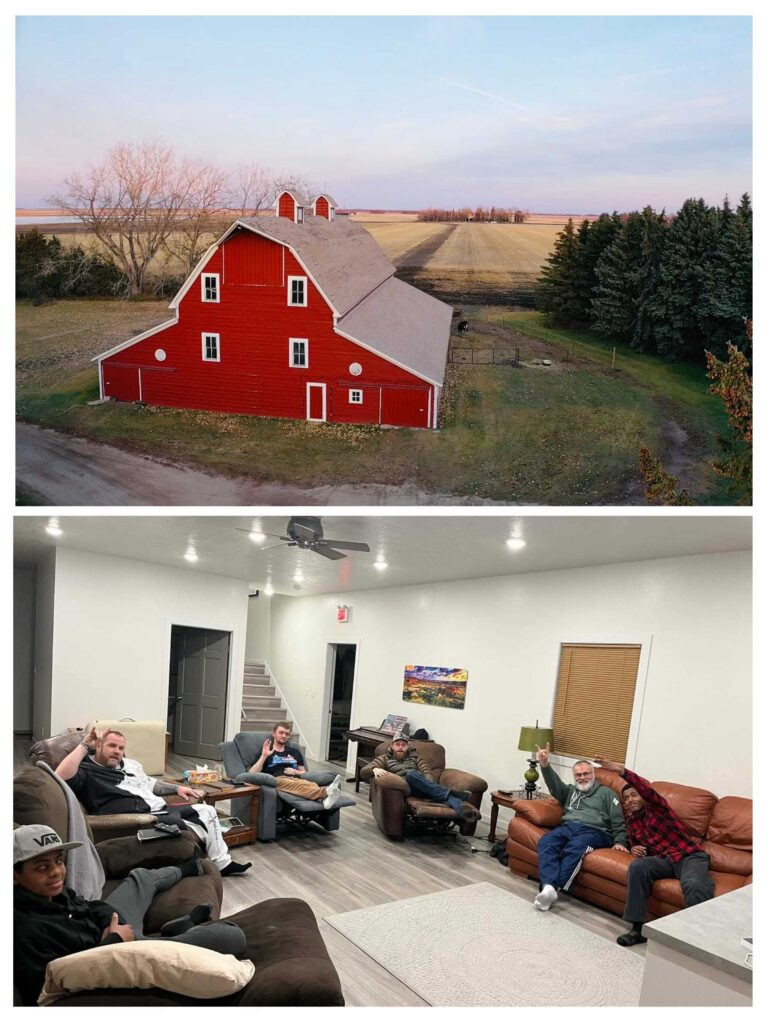
During their time at the farm, Father's Farm residents live on-site in a fully furnished two-story home. They hang out together, pray together, and share meals together, all of which are an important part of establishing a new social circle.
There’s no minimum or maximum length of stay at the farm, but, according to Chet, the pattern is that the longer the guys stay, the better the outcomes.
“So many times, guys come in here and think: ‘Three months and ill be good to go,’” he says. “Well, you’ve been on the wrong path for 20 or 30 years, and three months is usually not enough. That’s been our experience anyway. A lot of those bad patterns, ways of thinking, and heart postures don’t just disappear overnight. It takes time to help someone mature in their responses and perspectives and the way they react to life.”
The men are not expected to contribute financially for at least the first 90 days, an important policy according to Chet.
“What we usually see is a guy gets out of jail, has no money, a lot of debt, and no real place to go,” he says. “So they go back to what they know. They’ll go back to people they knew in the past who probably weren’t the most virtuous people. And those are the people who helped them get in trouble in the first place — whether it be family members or past friends — and the cycle starts all over again.
So the first three months are free.
“If guys have a job at that three-month mark where they can start to contribute back, they do,” he says. “But if they don’t have a good-paying job at that point, we try to be flexible.”
Father's Farm doubles as an event space where the local community hosts holiday gatherings, game nights, and even wedding receptions. Integration with the surrounding community has been a major part of the nonprofit's success.
About a decade ago, when Dan and Cleo were forming their vision for what Father’s Farm would become, they knew that in order for it to be successful, they needed buy-in from the community.
“Before we even formed our 501(c)(3), we invited people out to explain what we were thinking about doing,” Cleo says. “The idea was that these guys would not be isolated in an institution but rather that they would actually become part of the larger community. And so we told the people who came: ‘We want you to be part of this.’ Because for these guys to learn how to relate to people who are straight — and not a part of their subculture — in order for them to get reintegrated back into regular society, they need to feel comfortable relating to regular people. And we were inviting people to be a part of that.”
It worked.
From raising the initial $600,000 needed to kickstart the organization to helping construct the buildings on campus to, yes, even filling the room at the men’s graduation ceremonies, the community has been an integral part of the Father’s Farm story.
“50 or even 25 years ago, I don’t think the community would’ve allowed us to have this,” says Cleo, adding that Father’s Farm has also become a gathering space for other community events, including wedding receptions. “But because of the rise of the problem of drugs and anti-social behavior, the community basically said: ‘Hey, the problem is here. We can’t run from it.’
“So the interaction with the community has been wonderful. We’ve had farmers who have given guys pick-up trucks, people who have paid off some of their fines and debt, people who have invited these men into their homes. The interaction has become so much bigger than just this 23 acres.”
And as community support has grown, so too has financial support.
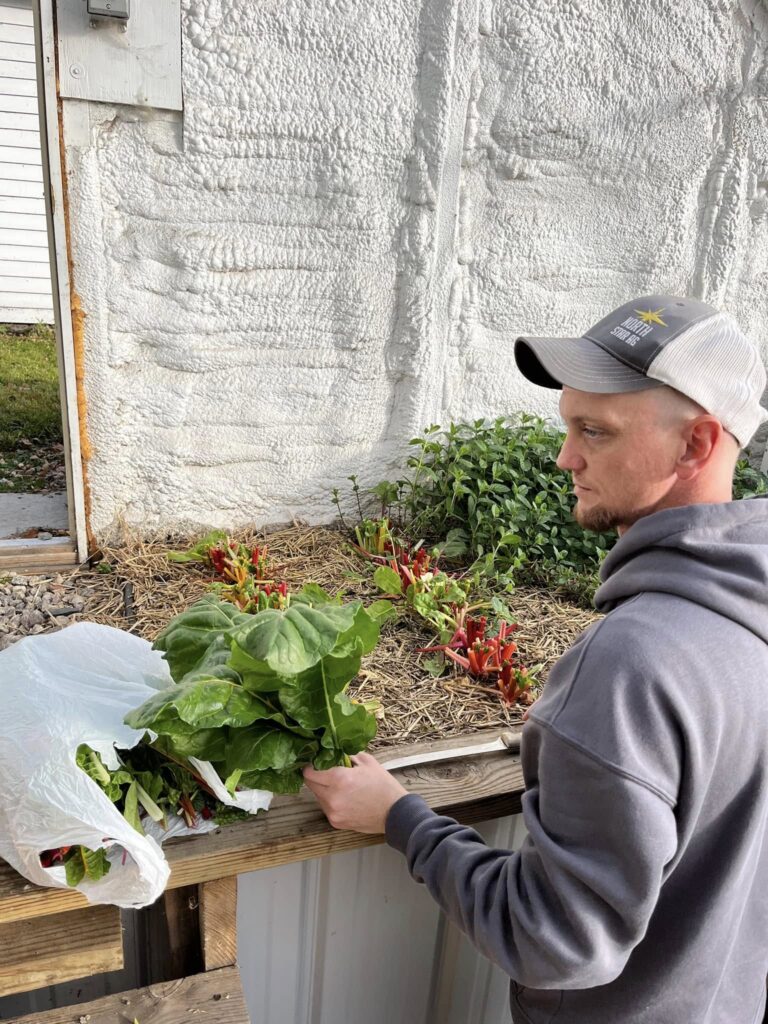
On Giving Hearts Day 2022, Father’s Farm asked their donors to help fund an on-site greenhouse that would allow the organization to grow their own produce year-round. The greenhouse, which is tended to by the men who live on the farm, stays so warm that it’s even able to house a lemon tree in the middle of winter. “We try to grow as much of our own food as possible,” says Father’s Farm Executive Director Chet Yoder. “That’s one of the ways we keep costs down.”
Father’s Farm had its biggest Giving Hearts Day ever this year, placing in the top five of the small-budget category. And while the organization has invested some time and money into marketing and outreach — and tries to take advantage of as many GHD fundraising trainings and resources as possible — the bulk of their success has been much more organic, says Cleo.
“A lot of the people who gave the big money right away were friends and relatives,” he says. “The trust level of the donors who invest in us has come from years of contact. I did drywall in this area for 30 years — met thousands of people. So when I went around and knocked on doors to raise money for Father’s Farm, these people knew me. They trusted me.
“Our president, Dan, knows everybody. It’s just his nature. The people around here knew what he was like when he was a younger man and how his life changed when he met God. Those are years of relationships and contacts and a level of trust (that you can’t just replicate overnight). People told us we were doing it backward — trying to raise hundreds of thousands of dollars before we’d actually done anything — but the reason we could do it that way is because of the long-term relationships we had. That was our collateral.”
Asked whether Father’s Farm’s unique model could be replicated in other communities across the region, Chet is cautiously optimistic.
“We would like to be replicable,” he says. “We’ve talked about it before in board meetings. You could find the money, you could identify some key leaders, you could take the system and schematics elsewhere, but ultimately, it’s about what Dad just said about the community. That’s the secret sauce. Do you have the right-minded community? That’s the part that would be really hard to replicate.”
About Father’s Farm
Father’s Farm is a caring community on a 23-acre farmstead in rural North Dakota. Its mission is to house and mentor men who are transitioning from incarceration and/or short-term drug- and alcohol-rehabilitation programs. Due to a number of factors, there is often a repeated pattern of returning to the same environment and lifestyle that contributed to their struggles in the first place. Men need a fresh start — a stable place to live, a nurturing space to grow emotionally and spiritually, and the opportunity and encouragement to develop strong work habits and build financial savings. Once that foundation is laid, the men can form healthier circles of influence and eventually positively influence their communities.