Whenever Tracy Alin visits House of Mercy orphanage in Andhra Pradesh, India, a familiar face opens the gate.
Shirt buttoned to the top — even on the most sweltering days — Moshe is there to greet her and the other visitors with a smile.
He’s 26 now and takes seriously his role as the head of waste-management at the home, and while it might seem like a modest vocation to some, Alin beams with pride when she thinks about where Moshe started.
“Moshe was rescued from a garbage dump when he was 10 years old,” says Alin, the long-serving executive director of Amistad Worldwide, a Detroit Lakes-based rescue foundation aimed at providing dignity and empowerment to some of the poorest people in the world. “When they brought him to (House of Mercy), he would hide under tables because he didn’t want anything to do with anyone.”
Moshe didn’t remember much about his past and clearly had some developmental disabilities, but RK, the founder of House of Mercy, refused to give up on him, Alin says.
“He kept running away back to the garbage dump, believe it or not,” she says. “It’s hard for us to imagine, but that was his place of safety and food. Everything else was unfamiliar. And he thought that every person was going to hurt him. But RK kept running after Moshe, bringing him back multiple times.”
Even after RK and some of his pastor friends went and actually cleaned up the dump site, Moshe would run off to another dump site. They had to do that multiple times before they got him to stay at the house.
“That’s the heart of pastor RK,” says Alin, adding that Moshe is just one of about 37 million orphan children in India. “He’s such an amazing man, and he goes to such great lengths for these kids. When I look at (Moshe), he’s just this gem. He represents all the kids, these beautiful gems buried under trash — discarded by society, nobody wants them — but they’re so beautiful.”
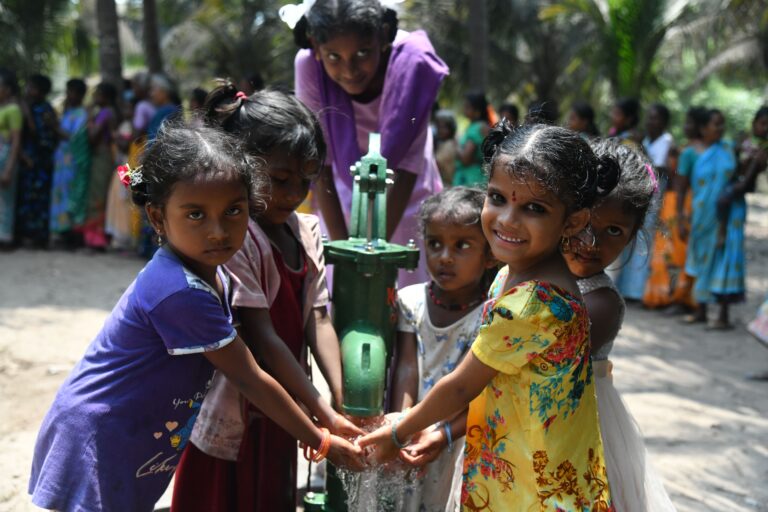
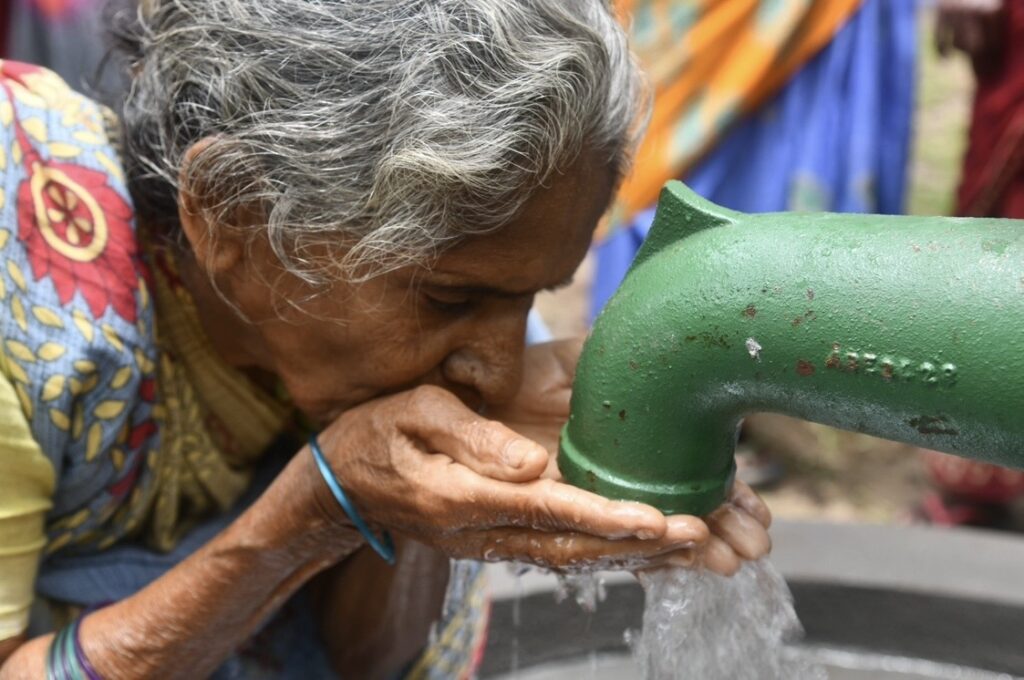
RK, whose real name Alin requests not be shared due to safety concerns in his home country, is Amistad’s longest-running partner and one of hundreds that the foundation works with in both India and Nepal. As two of the poorest and least-developed countries in the world, they’ve long been the focus of most of Amistad’s work, which runs the gamut from improving access to clean water and sanitation to education to supporting orphans, widows, and lepers.
As someone who’d always had interest in faith-based mission work, Alin founded Amistad in 2010 following a visit by an Indian missionary to her church to highlight the issue of human trafficking.
“He told this terrible story about a 7-year-old girl,” Alin recalls. “This lady had come to her village and promised her a job in a carpet factory. This little girl’s parents were really struggling to feed their family, so they gave this girl up. The lady promised to send money back home — made it sound like a great deal — but the little girl ended up being sold into a human trafficking network.
“She changed hands a number of times and ended up in a brothel where she was raped 20 times a day by men who would burn her with cigarettes. By the end of the story, I was just bawling my eyes out. I couldn’t believe I hadn’t heard anything about this stuff to that point in my life. I knew nothing about human trafficking, and it really broke my heart.”
Armed with a broken heart, a passion for helping the poor, and a desire to spread the Gospel, Alin began taking annual mission trips to India. And, with the exception of a couple years during the COVID-19 pandemic, she’s gone there every year since.
“India is the biggest hub in the world for human trafficking,” says Alin, who splits her time between Amistad and her role as a chaplain at a nursing home. “So we visited police officers, lawyers, rescue foundations, places where kids were being kept after being rescued. We learned all about the issue from every angle.”
It was during this trip that Alin had a serendipitous encounter with a young lady on a bus, who had recently built a website for House of Mercy — the one run by RK.
“That’s how I initially got connected with him,” Alin says. “(House of Mercy) just sounded like a place I wanted to be involved with. 100 percent of the money went to the kids. I could tell the money wasn’t the focus; it was the instrument. This man, RK, has changed my life. I thought I was a pretty good person — I work hard, I sacrifice – but he takes it to a whole new level.”
Alin says that while there were already a number of organizations doing great work in the space, she founded Amistad with a slightly different philosophy.
“I wasn’t trying to reinvent the wheel,” she says. “I thought that I could come alongside the native people — who already know the language and the culture and had the same heart as me — and together we could do the work. I wanted (Amistad) to be like a friend missionary. And that’s what Amistad means: friendship. ”
Amistad has gone on to help rescue and sponsor thousands of kids and build more than 5,000 wells across India, but its work started with the funding and installation of a single well at House of Mercy that remains there to this day.
“(The orphanage) was being discriminated against by the Hindu government because they were caring for orphans,” she says. “(Hindus) believe that if you end up as an orphan, you did something wrong in an earlier life, and the gods are punishing you. They don’t like people who rescue kids, so they weren’t allowed to connect to the city water system.
“The caste system is a really big obstacle and a reason why I feel like it’s really important for international help to go into India. I don’t always think international help is the best way to go about it — there’s a right and a wrong way to do it — but in India, because of the Hindu mindset, they have more orphans than any other country. It’s just unimaginable.”
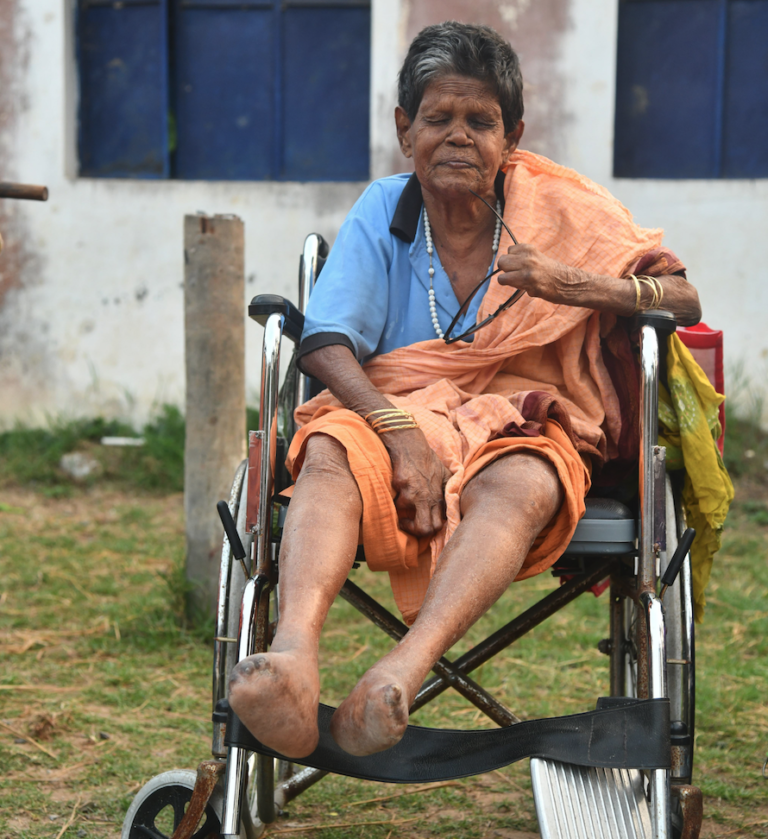
Another casualty of the caste system in India are widows, Alin explains.
“There are a number of homeless older women in India — mostly aged 60-80 but many younger as well,” she says. “Even the families will cast them out due to the fear of bad luck. They truly have nowhere to go.”
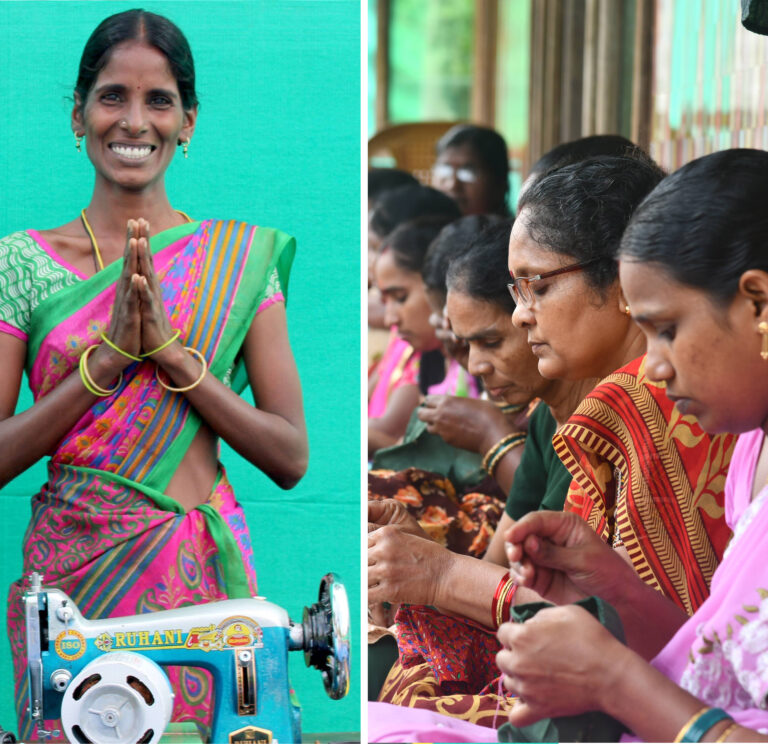
Amistad helps financially support about 2,500 of these women through a monthly widow’s pension, and because job prospects for them are so bleak, a few years ago Alin went to RK with an idea: What if they taught the women to sew?
It was from this idea that Stitches of Mercy was born.
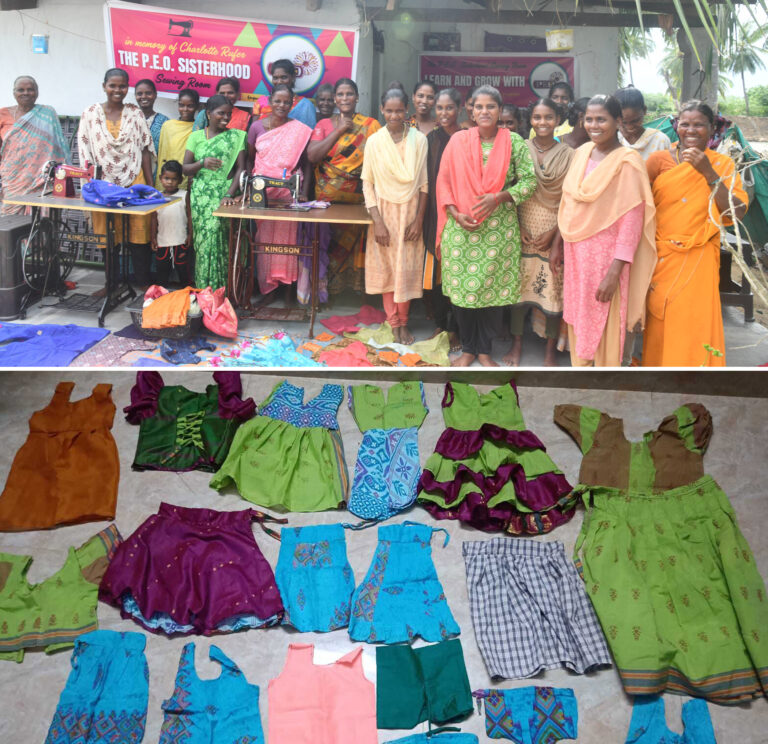
In partnership with their network of pastors, Amistad Worldwide established the first of its 53 sewing centers in 2018, which have since gone on to help nearly 5,000 women.
When a woman qualifies for the program, if she attends at least 80 percent of the training sessions, she has the ability to complete a test to ensure that she’s able to sew a certain number of items — bedding, bags, clothing — within 15 minutes. If she passes, she receives a certificate of completion and is gifted her own sewing machine. And, according to Alin, something much more significant.
“It’s really a sense of pride and dignity,” she says. “Our whole philosophy is to give a hand-up as much as possible, not a handout. The women come up and thank us and say: ‘You’re the only one who’s ever given me an opportunity.’ It’s also an opportunity for them to learn about a God of love instead of a god of punishment, which is all they’ve ever known.”
While all of Amistad’s programs are relatively low-cost to operate, their needs still grow every year. That’s why Giving Hearts Day, which accounts for more than half of the nonprofit’s annual budget, has been so important to the organization’s ability to reach more and more people.
“Giving Hearts Day has been such a huge part of what we do,” says Alin, who first got Amistad involved in GHD nine years ago. “It’s made us sustainable because, each year from October-February, it provides a little bit more of a focus for us. And we fill up our pot. Not that everything is about money, but it does give us an incentive and something to aim for.”
Despite not having a dedicated fundraiser or doing much formal marketing, Amistad is consistently one of the top earners in their budget category.
With a mostly local donor base and a donor-retention rate that hovers between 80-90 percent, Alin says the organization’s fundraising success relies on a combination of getting their donors personally invested in the mission, trust-building, and offering a variety of causes with which people can connect. And, with a donor base that has grown in number each year, it’s safe to say they’re onto something.
“I mostly use evidence of our work,” says Alin, who estimates that Amistad has earned about $90,000 in award dollars over the course of their time participating in Giving Hearts Day. “I think if people see how much you care about your mission — really, genuinely care about your mission — they’ll notice it and think, ‘Well, this must be really important if this person is so personally invested in it.’ They see me going overseas, and I’m like the liaison between them and the people over there. There aren’t a bunch of (middle men) that make them feel disconnected (from the mission).
“The biggest compliment I’ve gotten came just the other day from a pastor friend of mine who said: ‘Tracy, I know that people just really, really trust you.’ I feel like this is not my money, it’s God’s money. And I’m responsible, and I have to answer someday for that. I have thousands of dollars passing through my hands each month, and I feel very strongly about being accountable to the people who give it.”
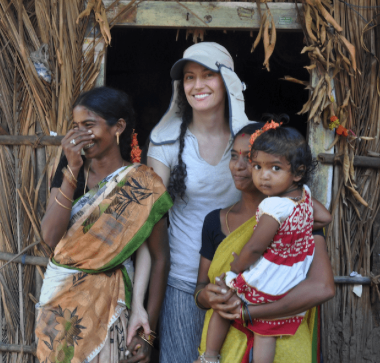
Something else that’s been highly effective for her is exposing people to the mission firsthand. Her own son and husband have been to India five and six times, respectively, and she’s brought countless groups of Amistad donors, board members, and volunteers along on mission trips to experience firsthand the people they’re impacting.
“Anyone who’s gone has come back as an advocate,” she says. “And things begin to spread through word of mouth.”
Alin has leveraged a group of about 10 faithful volunteers to help with more administrative fundraising tasks — thank you cards, clerical work, donor-database management — which frees her up to do more of the high-value work of meeting personally with donors, engaging with businesses, and giving presentations at churches and service clubs.
In addition to finding a trusted tribe that you can lean on, there’s another piece of advice she has for her fellow Giving Hearts Day participants.
“Start early,” she says. “Your donors aren’t necessarily on the same timeline as you.”
Over the past 16 years, Alin says Amistad has reached about 8 million people total, and, with its recent growth into Nepal — they now work with four orphanages there — they have no plans of slowing down any time soon.
“These countries are so populated that, whenever you do something for what you think is a small group of people, it ends up being for so many,” she says. “I don’t want to have regrets one day. My worst fear is not doing what I’m supposed to do. I know I’m going to face God one day.”
About Amistad Worldwide
Amistad’s mission is to demonstrate the love of Christ and develop the potential and dignity of the world’s poorest people who live on $1 a day or less. Every project they do is low-cost, with 100 percent of dollars going to those in need. Founder Tracy Alin travels to Amistad’s fields each year to see the work firsthand and returns with photos, videos, letters for sponsors, and stories. Amistad aims to stay small and simple but achieve great things. The organization has provided more than 8 million people with clean water in south India by giving 50 local “untouchable” men jobs digging wells. Amistad has established more than 50 sewing centers in India and Nepal, at which outcaste widows are trained and employed. They also sponsor thousands of orphans, widows, and lepers in India, Nepal, and Uganda and provide schoolbooks to 50,000 kids in slums.