“There are a whole bunch of kids just like you. And you sit in a spot to help not only yourselves but those other children. So what are you going to do?”
It was a lot to put on the shoulders of a group of 18-year-olds, but Mary Jean Dehne knew they needed to hear it.
She remembers that night in 2011 vividly, seated around her kitchen table with these three boys whom she’d known since their days at Ben Franklin Middle School in North Fargo. They were high schoolers now, and while she’d been trying to keep them on the straight and narrow through mentorship and tutoring, things weren’t clicking.
“The wheels were falling off the bus for them,” says Dehne, who spent more than 30 years as an educator before founding Legacy Children’s Foundation in 2012. “They just were not getting it or buying into the importance of it. And I told them I wasn’t going to help them anymore and that they had to take the bull by the horns and own their future.”
While it might have been hard to hear, Ajnur, Anthony, and Deng knew she was right.
“That was the roots of Legacy Children’s Foundation,” Dehne says. “It started at that kitchen table with those three boys. We talked about what was missing that they needed, what wasn’t available after school, and what would allow them to flourish in high school and ultimately find their way as productive adults.”
While she says she never had any intentions of working in the nonprofit world, her time at Ben Franklin changed her.
“I worked with New American refugee children,” she says, “And that really opened my eyes to the plight of their parents and the need for after-school resources for their kids. Because the parents themselves had diminished skills in language, social connections, and an understanding of how American society works. And they were struggling to be able to help their kids have a better life than their own, which is why they came to the United States (in the first place), to improve the lives of their children.”
As the children of refugees themselves, the boys she now sat with were uniquely positioned to make a difference in the lives of their peers, and so, guided by Dehne, they came up with the three pillars that would form the basis for the Legacy Children’s Foundation model: learning, serving, and leading.
“They wanted to be able to pay back to pay it forward,” says Dehne. “They wanted to feel like they were valuable members of society.”
While there are a number of after-school programs available to area kids, Dehne says Legacy differs in a few distinct and important ways.
“First, we actually look at what’s causing them to not do well in school,” she says. “We’re not just putting a Band-Aid on their lack of being able to do their homework. We’re digging into the wound as to why they can’t. And it’s always tied to reading and math.
“We’re also intentional about getting the kids out into the community. They must do at least 36 hours of service projects, which they develop, to stay on the team. And if they don’t, they’re taken off the team. And then leadership. We’re always pushing them to be in the spotlight as leaders of our organization. And so those components make us very different from other after-school resources that are just providing assistance with getting homework done.”
To become a Legacy student, an applicant must satisfy three of the following four criteria or receive a referral from their school with two of the four:
1. Low-income familly status
2. Struggling in school with a GPA under 2.0
3. Difficulty performing at grade level in reading and math
4. An extenuating circumstance in their life that’s causing them not to flourish (poverty, transient lifestyle, incarcerated parents)
Legacy kids, who range in age from 12-18, come from a wide variety of countries including Nepal, Bhutan, North Sudan, Nigeria, Sierra Leone, and Iraq, and about four out of five are first-generation Americans. Nearly 100 percent of them come from low-income families.
But these aren’t the only things that bind them together, says Dehne.
“The kids feel like they don’t belong here,” she explains. “That is a common theme. That they’re outsiders and they don’t fit in.”
And so while Legacy’s core programming is focused on academic support — four days a week, two and a half hours a day during the school year working one-on-one with coaches — the other parts of the curriculum are every bit as important.
“These kids don’t get out of town, and they don’t see the world,” Dehne says. “So Legacy kids can earn a trip based on grades, service, and their attitude at home and in school.”
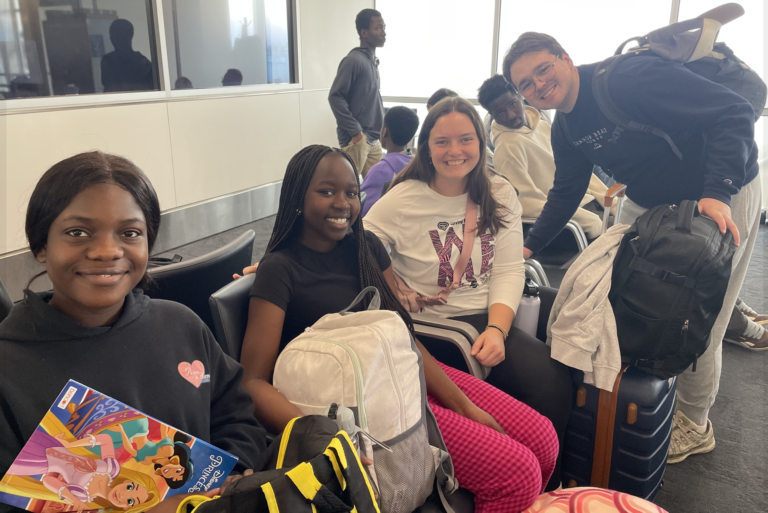
Each year, the high school kids are eligible to visit Washington, D.C.; the Tetons in Wyoming; and Rocky Mountain National Park in Colorado, and the middle school students go to Medora, the Black Hills in South Dakota, and the North Shore in Minnesota.
“It’s about showing them how to travel so that they’re no afraid to get on a plane or take the subway or travel down the highway,” says Dehne. “It also exposes them to a bigger, broader world. So everybody travels. And if you don’t, you’re not in Legacy. We’re kind of hard-ass about this stuff.”
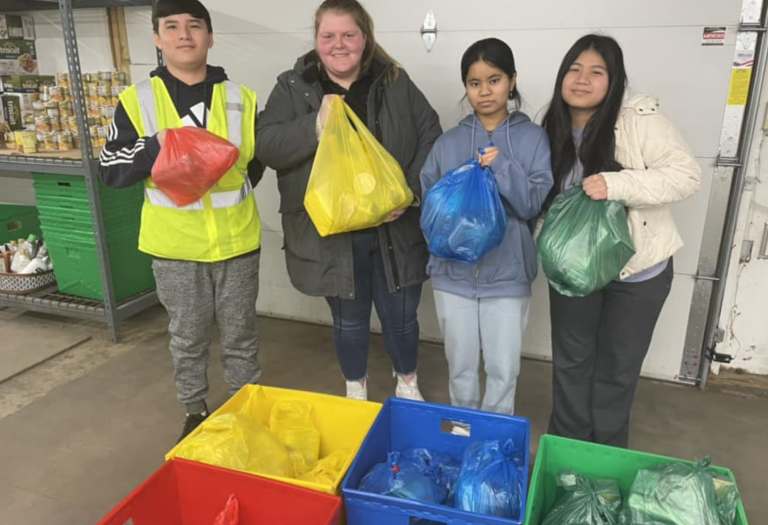
The kids also participate in a variety of service projects, where they sew hats and pillows for surgery patients and the homeless, fix bikes that they donate to neighborhood kids, and collect and distribute thousands of pounds of food each year to local families in need.
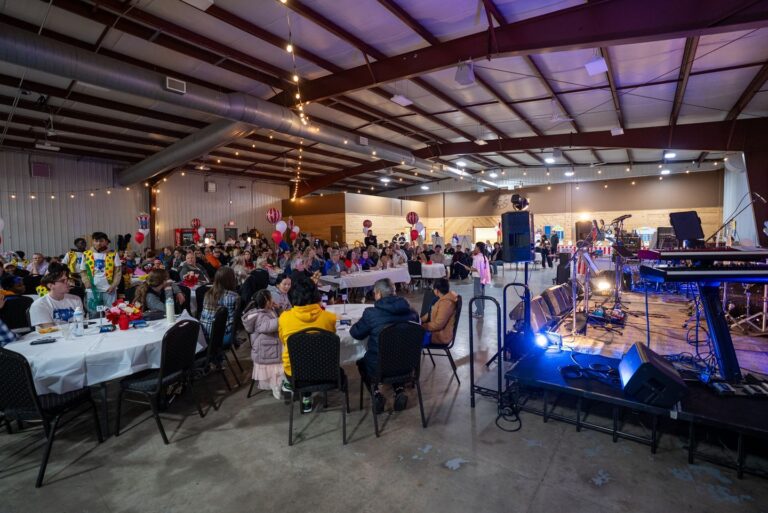
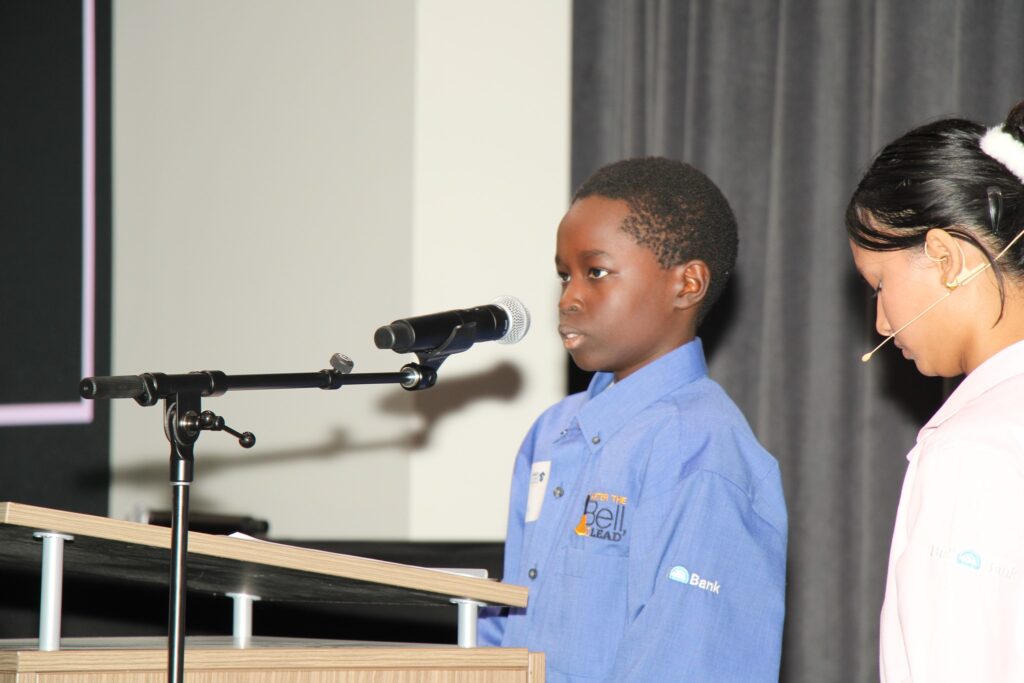
To get them comfortable with public speaking, Legacy students are expected to teach a class on a subject of their choosing and make a presentation at monthly fundraisers held at the Legacy Hub — the organization’s 10,000-square-foot home base in the Fargo industrial park.
There are countless success stories from the 376 kids who have now gone through the program — teachers, engineers, dental hygienists, future doctors — but perhaps none is as close to Dehne’s heart as Mary Sem.
“I’ve known Mary since she was in 4th grade,” says Dehne. “She was running around the Madison neighborhood when I was chasing around these older kids. Mary lived right across the street from Ajnur, so she saw me working with him and his twin brother. And so when Mary became a 6th grader, she joined (Legacy).”
Initially “quiet and shy but smart and charismatic,” Mary stayed in Legacy throughout high school before eventually graduating from Concordia College in Moorhead, Minnesota, with a degree in elementary education.
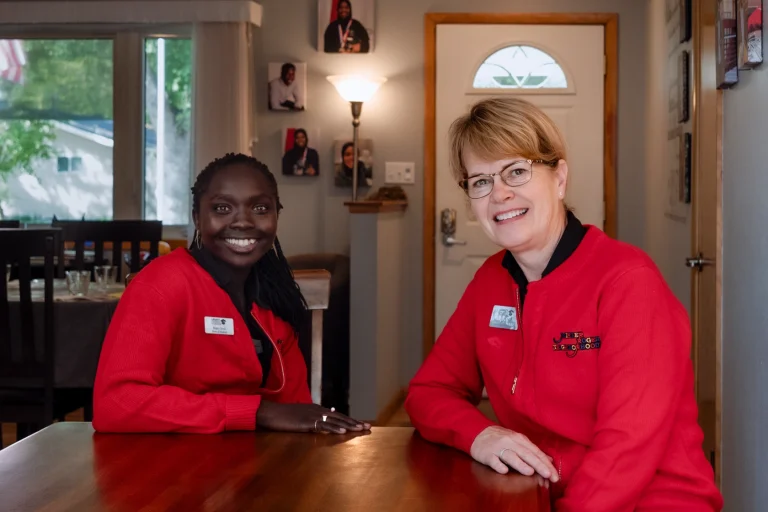
“I stayed in touch with her because I was eyeballing Mary from the get-go to become part of the succession plan for our organization,” Dehne says. “So when she graduated from Concordia, we made her an offer to join our team, and she’s been with us for three years now.”
It was a truly full-circle moment for Dehne and represented an important milestone in keeping Legacy’s mission going long into the future.
“We’ve found that our culture is so unique that it’s hard for outside people to get a good handle on the ‘why’ and ‘how’ of what we’re doing,” Dehne explains. “So, like a lot of businesses, it’s beneficial to hire from within.”
As Dehne continues to grow the Legacy team — they’re currently in the process of adding a second Legacy alum to their staff — it’s allowed her to focus on some of the longer-term strategic priorities of the organization.
“We need a (new) building,” Dehne says. “Good programming and high-impact organizations that are in this field of work — with low socioeconomic families — we have got to be a walkable resource. We have to embed in a low-socioeconomic neighborhood. We’re (currently) in the industrial park, and nobody can walk to us. We’re very grateful for the beautiful building we do have — that Monte and Scott Kjos basically gave to us — but it’s just the location is wrong. So before I (retire), I want us in a building in a neighborhood that needs us. The Madison and Jefferson neigborhoods are two we look at as potential sites for us to plant our feet. That’s the $10 million dream … more than $10 million likely.”
The other dream for Legacy is to be able to replicate their model in other communities because, as Dehne puts it, “there aren’t any communities in our country that don’t need this.”
“We’re working on it right now with local leadership,” she says. “To be able to have our proof of concept — both our programming and business model — cleaned up, duplicated, and shared with other communities.”
One thing that business model relies on is the generosity of donors, which is why Dehne says she devotes at least one eight-hour day per week to fundraising.
“Really, I’m fundraising all the time because Im always telling the story,” Dehne explains. “We like to call our people who are giving their time, talents, and money to us ‘investors’ and not donors. Because an investor is investing in something that grows in value. Well, young people are growing in value because of Legacy. So you’re investing in kids. You’re increasing their value as young people who are the succession plan for our country. What’s more important than that?”
And while Legacy Children’s Foundation raised about $285,000 on Giving Hearts Day this year, Dehne says the organization treats GHD as an important, but ultimately singular, piece of a diversified fundraising portfolio. And an opportunity to live its mission on an ongoing basis.
“We’re always trying to develop relationships with people in different ways.” says Dehne, who adds that Legacy hosts one major fundraising event each quarter throughout the year. “So it’s about always perpetually building relationships with people. Not just asking for a check and then sending off some copied thank you letter off in our computer. And we love Giving Hearts Day, but we try to think of it as not just raising money. It’s about raising awareness of being kind, good people all the time.”
About Legacy Children’s Foundation
A one-of-a-kind grassroots model crafted by Fargo-area youth to end their poverty, Legacy Children’s Foundation transforms youth into confident, educated servant-leaders with knowledge and skills to positively impact the world.