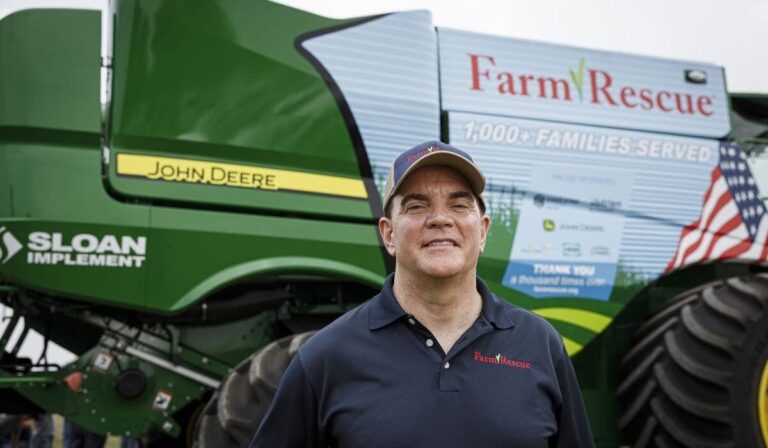
As Tim Sullivan sat down at his desk early on Giving Hearts Day, he got a call from an unknown number. It was from a Pennsylvania area code, and while many people would send the potential spam to voicemail, Sullivan was used to mystery callers.
“It was an older gentleman,” says Sullivan, who’s served as the executive director of North Dakota-based nonprofit Farm Rescue for the past four years. “You could tell he wasn’t very healthy. I said, ‘How can I help you?’ He told me he was having a little bit of trouble making his donation online, and he asked if I could help walk him through it. I said, ‘Of course.’ So we started going through it, and we got to the point where I asked, ‘Okay, what would you like to give?’ And he says, ‘I want to give $10,000.’”
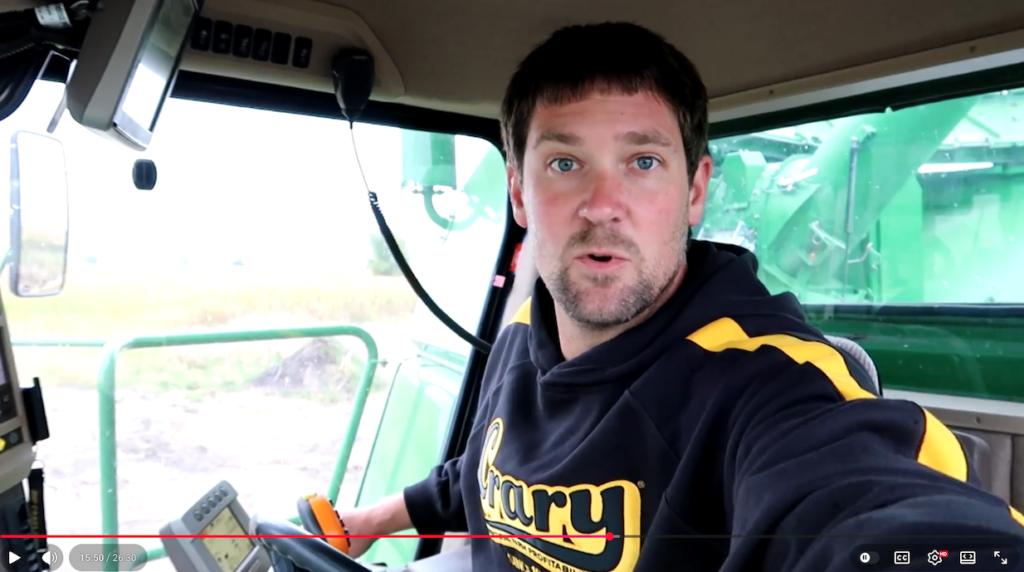
Despite having no direct connection to the organization himself, the man explained that his son had volunteered for Farm Rescue in the past and that he’d been following the organization for a few years after hearing about it from a popular YouTube channel called Millennial Farmer.
“It happens all the time now,” Sullivan says. “We get gifts from California, from the East Coast, from the Ohio River Valley. It’s amazing.”
It was a call that Founder Bill Gross probably couldn’t have imagined ever getting when he started Farm Rescue 20 years ago as a lifeline for local farmers in times of crisis.
The organization — which provides free planting, harvesting, and livestock assistance to farmers and ranchers — is now in 11 states throughout the Midwest and Ohio River Valley, and they recently helped their 1,300th family.
The case, while unique in some ways, was a similar story to the hundreds that came before it.
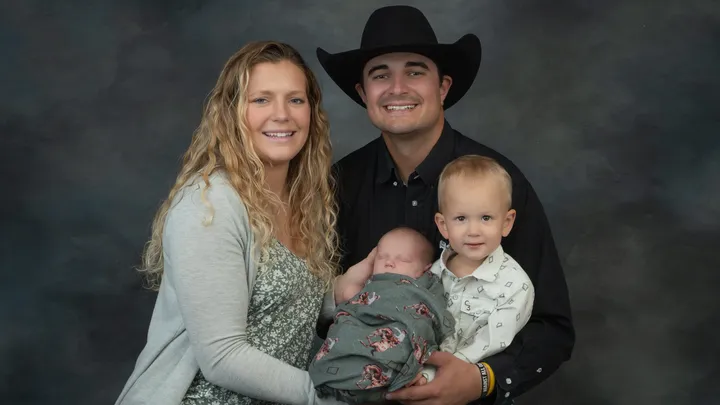
Just two months after welcoming a new baby and losing his father, 29-year-old JW Froelich had been diagnosed with testicular cancer. Faced with significant medical costs, travel expenses, and the pressure of keeping his fourth-generation North Dakota ranch afloat, Farm Rescue showed up to lend a helping hand.
“It’s like a scene out of Dances with Wolves out there,” says Sullivan. “It’s about 40 miles south of Mandan (North Dakota). Rolling hills. They’re a quarter-horse ranch, and then they have 5,000 head of beef cattle, as well as grain. It’s just him, his wife, and his two kids, and so he’s the one who’s the work horse. And he’s not gonna be able to do it. So we’re stepping in to do it for him.”
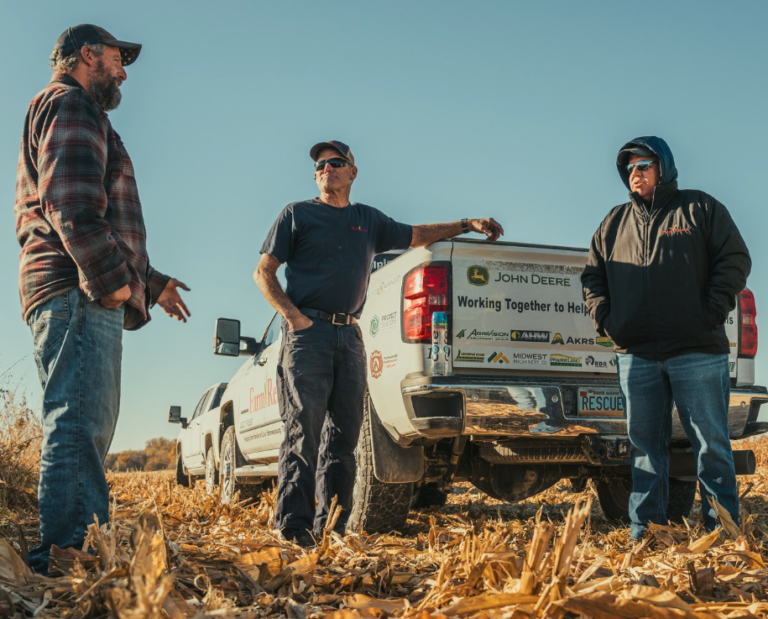
Each Farm Rescue job is done entirely through the help of local volunteers, which the organization helps recruit, coordinate, and outfit with machinery and resources. Assuming the weather cooperates, it takes a 3-4-person team about 3-4 days to complete 500 acres of work.
“We’re helping small- to medium-sized farmers,” Sullivan says. “We’re not helping the guy with 10 combines. It’s the people who don’t have a back-up. We’re mapping the fields, we’re providing the equipment, we’re talking about all the different things (that need to be done and considered).”
One of the most gratifying parts of the job, according to Sullivan, is seeing the response from the families once the work is finished.
“When I’m most impacted on these cases is when I get to actually make a connection and talk to the families,” Sullivan says. “Tears are flowing — from both us and from them — and it’s emotional. Because they see it. They see all the people working in the field, and they’re like, ‘Wow, you got it all planted in such a short period of time. We didn’t know how you were going to do that. You saved our farm.’ I hear it all the time. And while that’s not our goal — to save the farm — we are out there to get them over that short hump.”
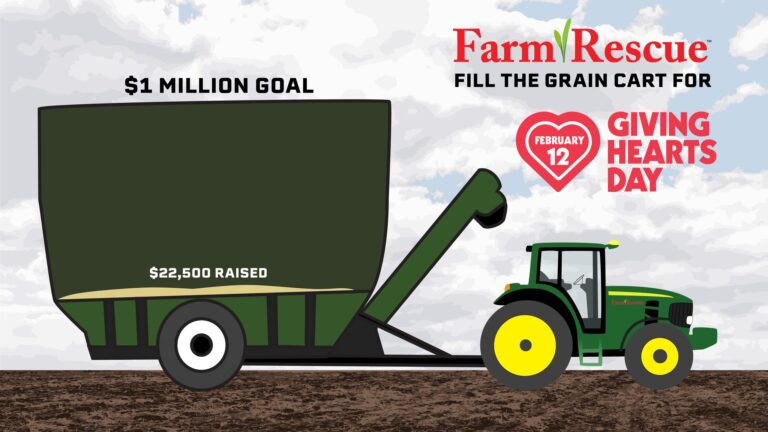
Even with mostly volunteer labor, the cost of running an operation like Farm Rescue is significant. In addition to the major capital investments required — they’re currently raising more than $1 million to purchase a new combine — each job costs about $12,000, on average, to complete. And with the nonprofit now helping more than 100 families per year, bringing in dollars has become a top priority.
“It’s a necessity,” says Sullivan, who, as executive director, estimates that he spends about 75 percent of his time on fundraising. “It’s about revenue streams and having more than one. It starts with our partnerships. We now have more than 200 annual (business) partnerships, which range from $1,000 a year to $1 million. We’re connected with a lot of folks. We actually just did our first-ever Iowa fundraiser in March. It was our first try at (hosting something outside of North Dakota), and we didn’t know how it was going to go over. But thanks to tremendous support from our partners and volunteers down there, we raised $60,000 in a night.”
When Sullivan joined the Farm Rescue team in 2019, he saw that there was one revenue stream that was noticeably lacking.
“I looked at Giving Hearts Day and thought: This campaign is built for a nonprofit like ours,” says Sullivan, who spent his first three years with the organization as development director before taking on the executive director role in 2022. “When I came in as an outsider, I thought: This has the possibility to be much bigger (for us). We’d been in (GHD) since 2015, but we hadn’t really done much. And I just knew we could do much better.”
And that’s exactly what they’ve done.
What started with a big jump between 2023 and 2024 has led to $1 million Giving Hearts Days each of the past two years. This year, they had their best GHD ever, raising more than $1.2 million.
Sullivan says they had to rethink a number of aspects of how they were approaching the giving day, starting with the untapped potential of their match.
“We had to really figure out how everything worked with the match because we had never taken advantage of it,” explains Sullivan, who says that he starts working on securing Farm Rescue’s match dollars for the next Giving Hearts Day almost immediately after the event ends. “Through these matches, it’s given us opportunities for partnerships with larger businesses and family foundations.”
What’s been key for them, he says, is finding partners that are interested in something more than just a financial relationship.
“Your heart’s gotta be in it,” Sullivan says. “You’ve gotta show it. I’ve had people give for the wrong reason, and I tell them up front: ‘You can write us a check. That’s fine. But we want partners that are involved, engaged, believe in what we do … but also come along(side). I would rather have a $25,000 donor than a $500,000 donor, if the $25,000 donor has their heart in the right place.”
They’ve also gotten better at turning every event, speaking engagement, and conference that they attend into an opportunity to recruit new donors to their mission, Sullivan explains.
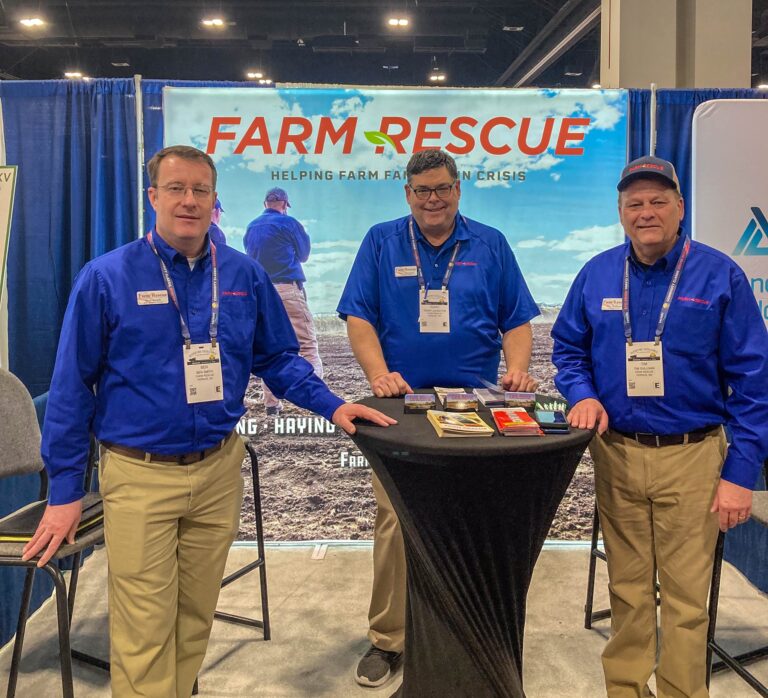
“Now, we know the power (of that),” Sullivan says. “When we’re at a farm show, we’re collecting people’s information. That’s going into our database. That’s what’s building our Giving Hearts Day mailer. Any time these (other Giving Hearts Day) nonprofits are hosting an event or are at a function, they should be having a door prize or having some kind of sign-up or something. Because you might not think those names mean anything, but they do. Because there’s always a certain small percentage who will give off of that … and some of them are really good givers.”
There are other factors that have helped Farm Rescue make the leap its made over the past few years — leveraging social media storytelling, networking with other top charities, and good old-fashioned word of mouth from the farm families they’ve helped — but Sullivan says nothing has moved the needle quite like influencers.
It started with a relationship with Zach Johnson, the Central Minnesota man behind the popular “Millennial Farmer” YouTube channel that sparked the $10,000 GHD gift from the Pennsylvania caller. For Sullivan and the Farm Rescue team, Johnson and his millions of followers represented a massive opportunity to connect people interested in agriculture and farming content with the charity’s mission to support farm families.
“The people who are watching him aren’t necessarily farming today, but they grew up with a dad (who did) or a grandfather (who did)” Sullivan explains. “Somebody in their past did farm so it means something to them. Agriculture means something to them.”
Sullivan says they “bugged” Johnson for about three years, even making trips out to his farm in Lowry, Minnesota, to get to know him and pitch him on what Farm Rescue was all about.
“We told him, ‘We don’t have a lot of money, but maybe we can pay you.’” Sullivan says. “He said, ‘Absolutely not. I’m a giver. But just let me think about it.’”
Their persistence ended up paying off, as Johnson came back to them a few months later and said he was in.
“He said, ‘I’m going to give you a couple posts this year, and let’s just see how you do,’” Sullivan recalls. “The first post he did for us that fall — a harvest case — brought in $120,000 in a week in donations.”
That’s when they realized they were onto something.
“We saw the power behind him,” he says. “And so then we started working with other (agriculture) influencers and that’s kind of how we work it today with Giving Hearts Day and to get the message out. And it’s huge because we tag on to their followers, and all of a sudden, we’re getting donations nationwide.”
While the influencer route might not be for every organization, the lesson in Farm Rescue’s experience is simple: Get creative. If you’re having trouble gaining traction or feel like your fundraising has plateaued, explore new revenue streams, expand your existing networks, or experiment with different ways that you can expose more people to your work.
Whatever you do, do it with intentionality and purpose, and your tribe will find you.
About Farm Rescue
Farm Rescue is the only nonprofit organization that deploys volunteers, equipment, and compassion to farm and ranch families facing crises. For the past 20-plus years, Farm Rescue has helped more than 1,300 families continue their operations because they know that even the most independent farmers need help sometimes. Founded in 2005 by Bill Gross, Farm Rescue believes that successful farm families fuel successful communities.