If you grew up a fan of comic books, you remember the Bat Signal.
In the mythical Batman universe, whenever Gotham City was under attack, the police would fill the night sky with a giant, bat-shaped searchlight to let Batman know his help was needed. And every time — day or night, rain or shine — he’d answer the call.
While Gail Adams-Ventzke and her team at CATS Cradle don’t wear capes or fight crime, for cat-lovers throughout the Red River Valley, they’re every bit the superheroes.
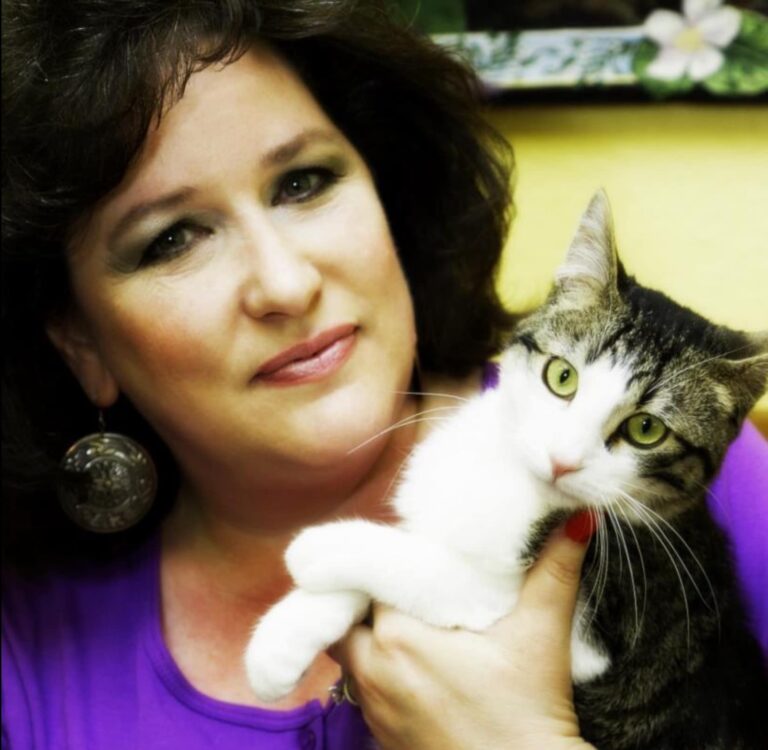
“All the vets know that my phone is on 24/7, and trust me when I say they use it,” says Adams-Ventzke, who’s served as the executive director of CATS Cradle Shelter since the nonprofit’s founding in 2011.
CATS Cradle is a no-kill rescue shelter based in Fargo, and for the past 15 years, Adams-Ventzke and her small but mighty team have been giving area cats a second chance.
What started as an independent hobby rescue in the early 2010s became something much bigger in January 2012 following a trip to a local pound with her friend and fellow CATS Cradle cofounder, Carol Stefonek.
“We were there to pick up a couple of cats, and when we handed our crates over, the gal who was running the pound came back after filling the carriers, and we could tell she’d been crying,” recalls Adams-Ventzke. “Immediately, I thought maybe she’d been bitten, so I asked, ‘Are you okay? Did you get bit?’”
Her response would change the trajectory of Adams-Ventzke’s and Stefonek’s lives.
“She said, ‘You ladies just don’t understand how much it means to have you guys taking these animals because, for the past seven years, the last task of my job every day has been to euthanize animals that are treatable or healthy — just because they had no place to go. I cry myself to sleep every night, but this is the first month in the history of this pound that I have not had to euthanize even one cat. And so Carol and I vowed to her that day: You’re not ever going to have to do that again, as long as our doors are open.”
It’s a promise they’ve kept, as CATS Cradle has worked tirelessly for the past decade and a half to help reduce the annual feline euthanasia rate in the Fargo metro from nearly 700 each year to zero.
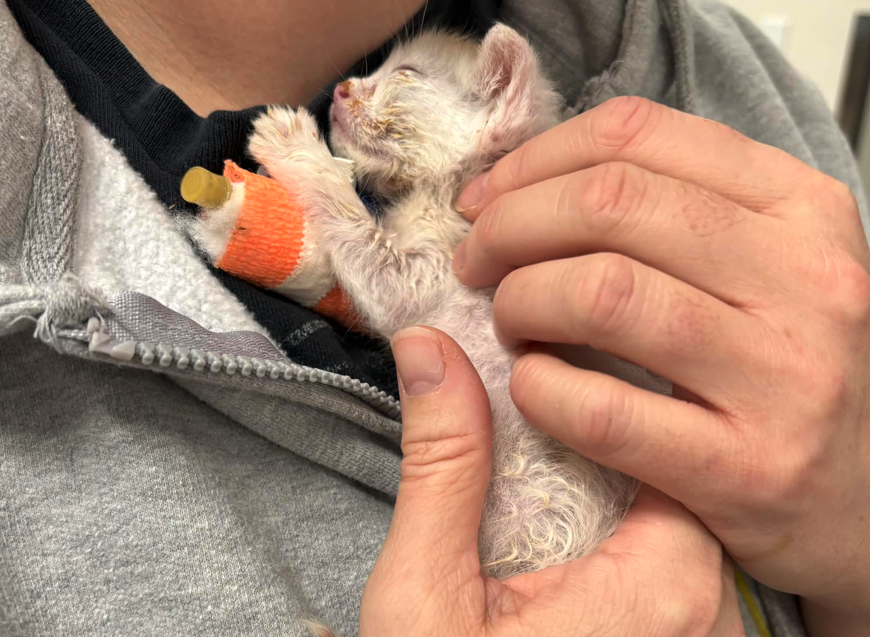
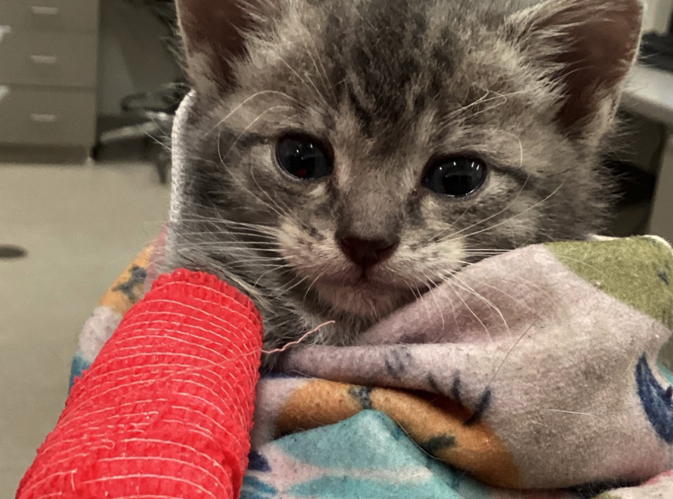
“Cats used to be euthanized for just having a sniffly nose or an eye infection,” she explains. “They were automatically deemed unadoptable because they required medical treatment. We knew that the healthy, cute, adoptable ones would get picked by other rescues. So we started taking the sick and injured ones who needed us most. And that’s become part of our reputation is that we focus on the really hard cases.”
It was a natural fit for Adams-Ventzke, who says she’s always gravitated toward the underdog.
“My mother told me I was always bringing strays home as a child,” says Adams-Ventzke, who worked for a stockbrokerage firm before deciding to become a stay-at-home mom and eventually finding her second calling as a shelter director. “But it wasn’t just stray animals I brought home. It was people, too.
“In middle school, there was this one girl who was constantly being picked on by a couple of older kids. She always sat alone at lunch and kept to herself. Then, one day, a girl walked up behind her, grabbed the back of her head, and shoved her face into her lunch tray. She was humiliated and crying, and I followed her into the bathroom to help her clean up and comfort her. From, that day on, she became my best friend. I never wanted her to feel alone again. I wanted to protect her from cruelty. In many ways, it’s the same thing that drives me to help animals.
“I know that many of our cofounders, volunteers, fosters, and staff members probably have similar stories that brought them to become a part of the CATS Cradle Shelter family, and I am eternally grateful to each and every one of them for their hard work and dedication. They are the spokes that that keep the wheels of success turning for our shelter.”
While traditional rescue shelters house a variety of species, the decision for Cat’s Cradle to focus on cats was intentional, Adams-Ventzke explains.
“We’re the only brick-and-mortar, cat-only rescue in the area,” she says. “When we looked at the data from local pounds, it was clear that cats were at much higher risk.
“If 1,000 dogs and 1,000 cats enter the local pounds in a year, a large percentage of dogs will be reclaimed by their owners or transferred to rescue. For cats, only about 30 percent were being reclaimed or rescued, while roughly 70 percent were euthanized, historically. We hear it all the time: ‘It’s just a cat.’ If somebody’s dog ends up in the pound, they’ll pay the $150 to get it out. (Most people) aren’t going to pay to get their cat out. They’ll just go get another cat.”
For Adams-Ventzke and her cofounders, it became clear that cats needed a dedicated voice, and that’s what CATS Cradle was created to be.
While they’ve cared for up to 225 animals at once, the Downtown Fargo shelter typically houses about 40-50 cats and kittens at a given time, with anywhere from 100-175 in their foster care program. Every cat that arrives receives comprehensive medical care, including deworming, vaccinations, FIV (feline immunodeficiency virus) and FeLV (feline leukemia virus) tests, microchips, and spay or neuter surgery. If a cat requires additional care such as dental work, amputation, eye surgery, emergency surgery, or treatment for illness, Cat’s Cradle ensures that those needs are met and paid for before adoption.
In some cases, they’re a cat’s last hope, as was the case in March 2012 when — just a few months after opening — a cat named Corky found his way through their doors.
Corky had a condition called bilateral arthrogryposis of the tarsus, and in a world before CATS Cradle existed, he wouldn’t have made it.
“Basically, he had no mobility in his joints at all,” Adams-Ventzke explains. “His back legs could not bend or move independently. The joints were just fused together, and there was no way for him to walk normally. He dragged himself around, causing injury to his feet and legs. I called every vet in town and in the surrounding area, and nobody would touch this cat with a 10-foot pole. They all said: ‘There’s nothing we can do for this cat.’”
As fate would have it, one of Dr. Dan Burchill’s vet techs at Casselton Veterinary Services in Casselton came across Corky’s story on CATS Cradle’s Facebook page, and after learning more about the case, Dr. Burchill offered to help.
“After consulting with a vet he knew in Europe, (Dr. Burchill) fashioned a surgery,” Adams-Ventzke recalls. “And what he did was disconnected his legs, turned them around, and reconnected everything. For 28 days (after the surgery), we went out to Casselton every day to make sure Corky was okay and to take him outside and do therapy with him.”
But that wasn’t the end of the story.
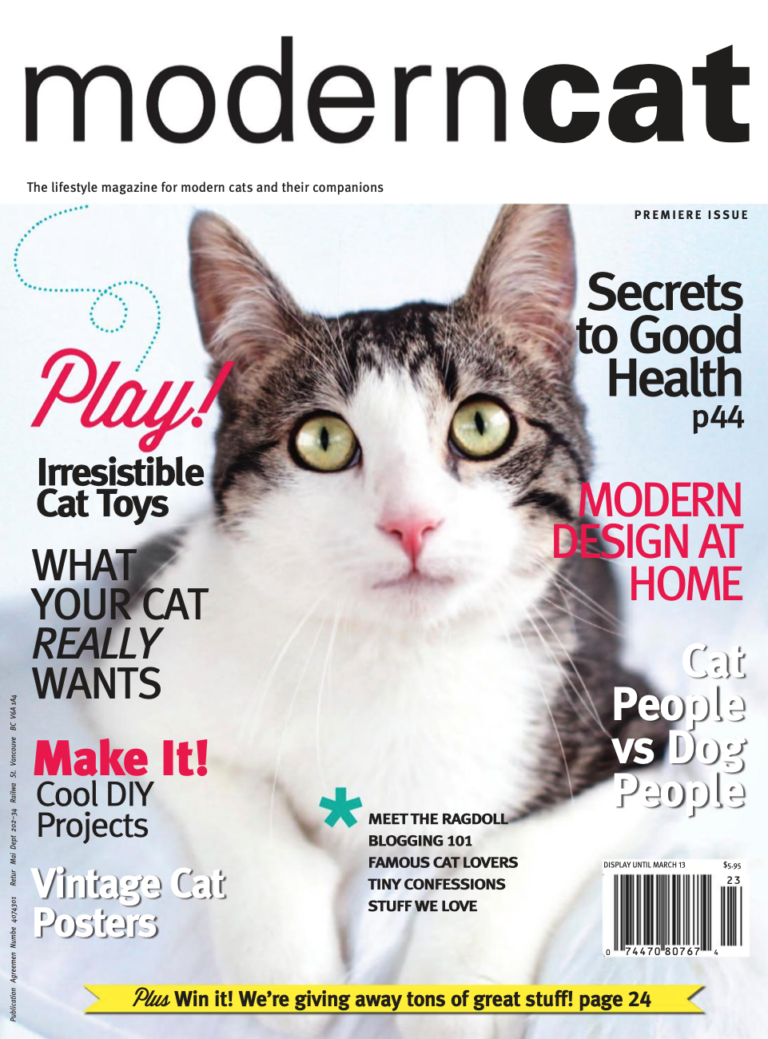
Corky became something of a viral sensation, racking up tens of thousands of social media followers and raising $20,000 in just 24 hours on Facebook. He won a contest to grace the inaugural issue of Modern Cat magazine, and his story was featured in two episodes of an Australian soap opera called “The Neighbours,” on three episodes of a viral video show called “Right This Minute,” and on Wolf Blitzer’s show on CNN. His image was also included in a deck of cards for internet-sensation cats.
“He put us on the map,” says Adams-Ventzke.
More importantly, it showed her the power that social media had to tell the stories of the shelter cats and reach people beyond just the local community.
“There’s a very kind woman in Colorado who’s adopted several (cats) from us, and she always goes for the special-needs ones,” Adams-Ventzke says. “If I need a really special adopter, she’s my go-to. And we even deliver them to her (on our own dime). We’ve done it three times for her.
“Then there’s a lady down in North Carolina who had an FIV colony in her house, and she just rescued FIV cats. Probably because of Corky, she got on our page and started seeing all the other things we would post. She reached out about FIV-positive Sam and Dean and said, ‘Hey, I think I can take these two.’ That one took me about three weeks to arrange transport for because part of it was done through Imagine Home. It’s sort of what they call the ‘underground kitty railroad,’ where one person will take a cat, drive it 45 minutes to an hour to the next town, and then hand them off to the next person and the next until they get to their destination.”
Then there was their first big hoard rescue in North Fargo.
“I got a phone call that tipped me off that there was a house being demolished, and there were like 30 cats there,” Adams-Ventzke says. “She said there were bulldozers out there, and they had already taken down the garage and injured one of the cats so she asked if I could ‘call my people.’ My first call was to my connections in media, and my second call was to my cofounders (Carol, Amber, and Jill), and I told them to meet me at the house. We got there in time to stop the demo. They ended up giving us three days to get the cats caught and out of there.”
In addition to traditional adoption, CATS Cradle also offers another option. Pawspice, as it’s called, is aimed at older cats that are less likely to find a forever home than their younger counterparts.
“Occasionally we get animals in who are really old — like say, a 15-year-old with hyperthyroidism, diabetes, kidney failure,” Adams-Ventzke says, “The adoptability drops significantly. So what I’ll do is call people who maybe didn’t qualify for adoption (due to financial or other reasons) and say: ‘I know adopting might not be an option for you right now, but we have this special cat that, due to a medical condition or age, it’s not super adoptable. We don’t want this cat to have to live in a shelter for the remainder of its life so if we supply everything it needs, would you want to foster it?’ It’s a win-win.”
The program, which currently has six cats in it, allows an animal to go to a loving home for the last year or two of its life without burdening the foster family with costly vet and food bills.
All of this work takes money, of course, and that’s why an event like Giving Hearts Day is so essential to a small, plucky organization like CATS Cradle.
“If it weren’t for Giving Hearts Day, I don’t know how we would do it,” says Adams-Ventzke, who says that much of CATS Cradle’s medical budget is funded through GHD donations. “We rely heavily on Giving Hearts Day.”
Despite steady growth for CATS Cradle since its first GHD in 2016 — including its most successful Giving Hearts Day ever this year with $147,163.82 raised — Adams-Ventzke says she still struggles, at times, with the development part of her role. However, knowing there are so many people out there who share her commitment to the mission helps.
“It’s probably the most uncomfortable thing for me to do — having to ask someone for money,” she says. “So instead, I try to build genuine relationships on a personal level. Once people see what we do and get to know us, they usually become invested on their own. Eventually they’ll ask, ‘Hey how’s fundraising going?’ And I’ll say, ‘Honestly, we’re struggling a little right now.’ Then, suddenly, boom! Here comes a check. We prefer to invite donors to see firsthand where their money is going.”
“My whole thing has always been: I’m going to tell the story, and then let people do what they’re going to do. I’m going to say: This is what we need. If you can donate, great. And if you can’t donate, then you can still help by sharing our story. That’s what I do. I leave it up to them. And all they have to do is look at our history and see what we’ve done and see that it’s always a ‘cat comes first’ mindset.”
About CATS Cradle Shelter
CATS Cradle’s mission is to create a more humane and compassionate world one cat at a time. Opening its doors in January 2012, CATS Cradle Shelter relies entirely on donations to rescue and provide for the abandoned cats and kittens that come into its care.