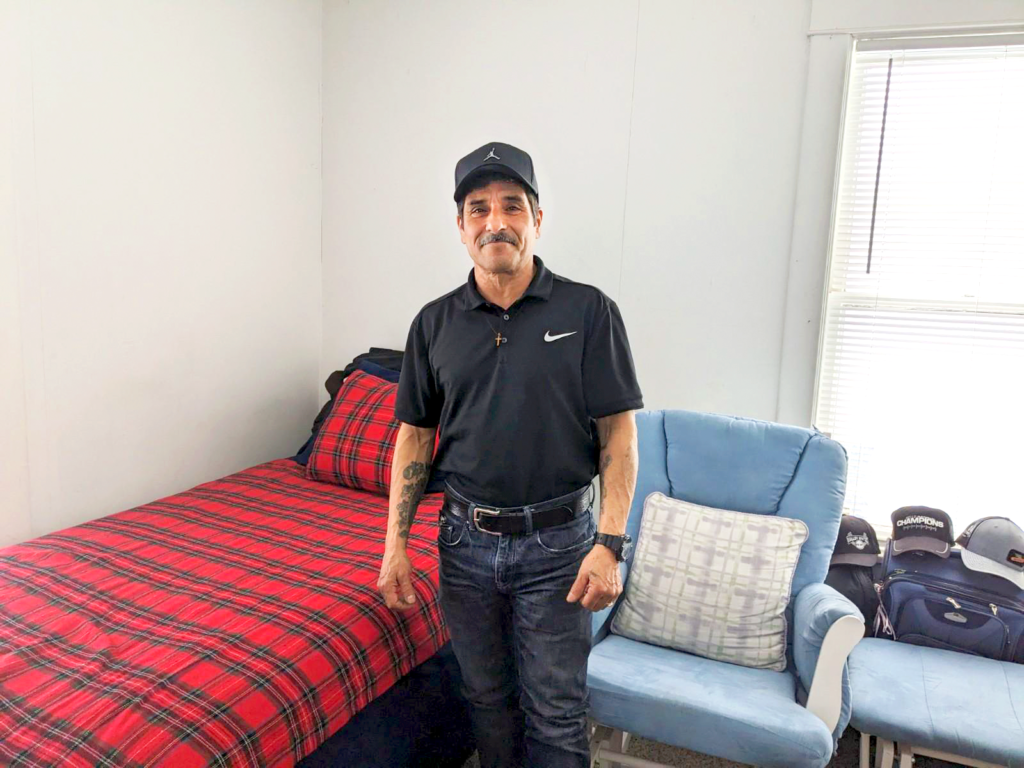
When John, Brian, and Francisco walked through the doors of New Life Center, each brought with them a unique story and set of circumstances.
John had recently lost his job as a truck driver and was facing a cancer diagnosis.
“I was a drunk,” he says. “I lost jobs. Got divorced. Didn’t have much to do, so all I did was drink and watch TV. (One day) I was sitting at McDonald’s, in the parking lot, and I was toying with the idea of either sticking a gun in my mouth and pulling the trigger or jumping under a train.”
Brian, recently out of jail, was struggling to escape the people and habits that had wreaked havoc on him throughout adulthood.
“I got into drugs and alcohol at a young age,” he says. “Every time I would try drinking alcohol as a teenager, I would drink until I blacked out and until I had alcohol poisoning. And you could follow the trail of vomit around town and see where I was based on where the vomit trail was. I struggled off and on with that for most of my life.”
Francisco, whose wife and daughter had both recently passed away, was in the midst of a relapse and looking for a reason to keep going.
“You don’t plan your life for (bad) things like that to happen to you,” he says. “I was at a point where (I was wondering), ‘How do I go on?’ So I went back to doing things I shouldn’t have done.”
While their stories are different, the thread that connects these three men — and the hundreds of others that New Life Center serves each year — is similar, says Executive Director Rob Swiers.
“Brokenness,” Swiers says matter-of-factly. “Every single one of them is dealing with brokenness in some form or fashion in their life.”
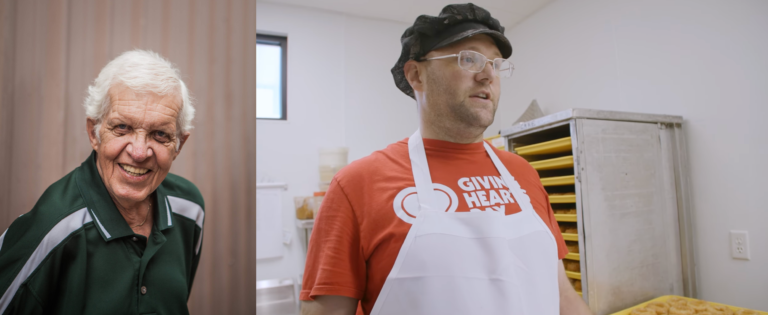
Swiers, who has led the Fargo rescue mission for 13 years, understands the plight of the men he serves better than most.
“I’d been in a lot of trouble in my late teens and early 20s,” recalls Swiers, who says he underwent a profound spiritual awakening at the age of 25. “It was the despair of not understanding what life was really about. If this is all there is, I don’t get it. There was a need that I tried to satisfy through alcohol, through relationships, all those things that we chase. And nothing satisfied me.
“What led me to commit my life to Christ was a recognition of (that) brokenness in my own life. There is no difference between me and the guy sleeping in a tent. I had a few breaks go my way. But I could just as well have been there after having multiple DUIs and just (given) the position I was at in my life. And I recognize that.”
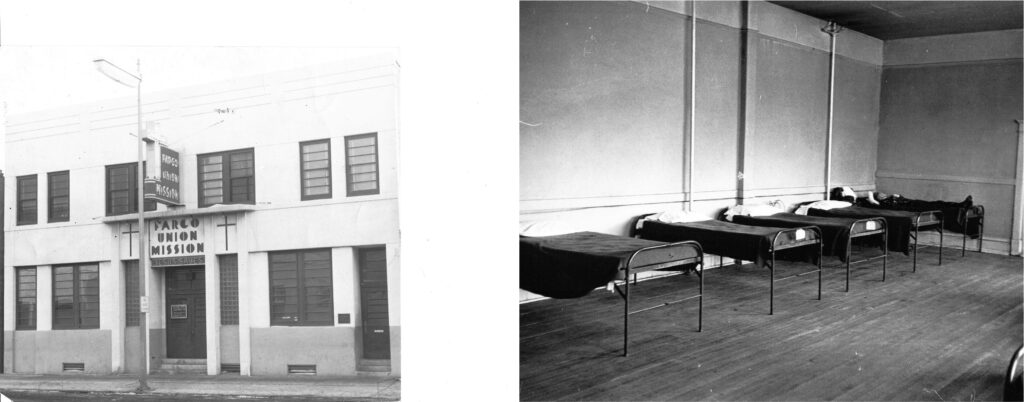
Swiers is just the fourth person to lead the 119-year-old New Life Center, which was founded in 1907 by a Fargo preacher named Orlando Eli McCracken. Known first as the Glad Tidings Mission and later incorporated as the Fargo Union Mission, the organization was started primarily as a way to do neighborhood outreach, preach the Gospel, and provide food, shelter, clothing, and other basic needs to the community.
A casualty of mid-century urban-renewal efforts in Fargo, in 1968, the mission was forced to move from its Downtown Fargo location to its current home just east of the city’s industrial park. It was at this time that the rescue mission rebranded as New Life Center and began to evolve into something more than just a basic-needs shelter.
“They realized the mission was changing,” says Swiers. “And so they began to lean more into a program structure for the men they served.”
New Life Center operates a 132-bed emergency shelter — which provides a place for area men experiencing homelessness to get a hot meal, a shower, and a bed for the night — but over the years, they’ve continually added new programs and services with the hope of giving their guests the best chance possible at long-term success.
“As we continue to grow and see that there is a bigger need in our community, we need to be able to meet them with other resources,” says NLC Advancement Director Andrea Feigum, “Which means not just shelter beds. We’re continuously looking at: How can we improve the programs and services we already offer, and how can we improve upon them to continue meeting the growing complexity of those who are showing up at our door?
“It’s so much more than just giving them a place to sleep or food or clothing. It’s really seeing them as a whole person and helping them understand that they have value, no matter what their circumstances are. And that the circumstance that they’re currently experiencing does not define who they are.”
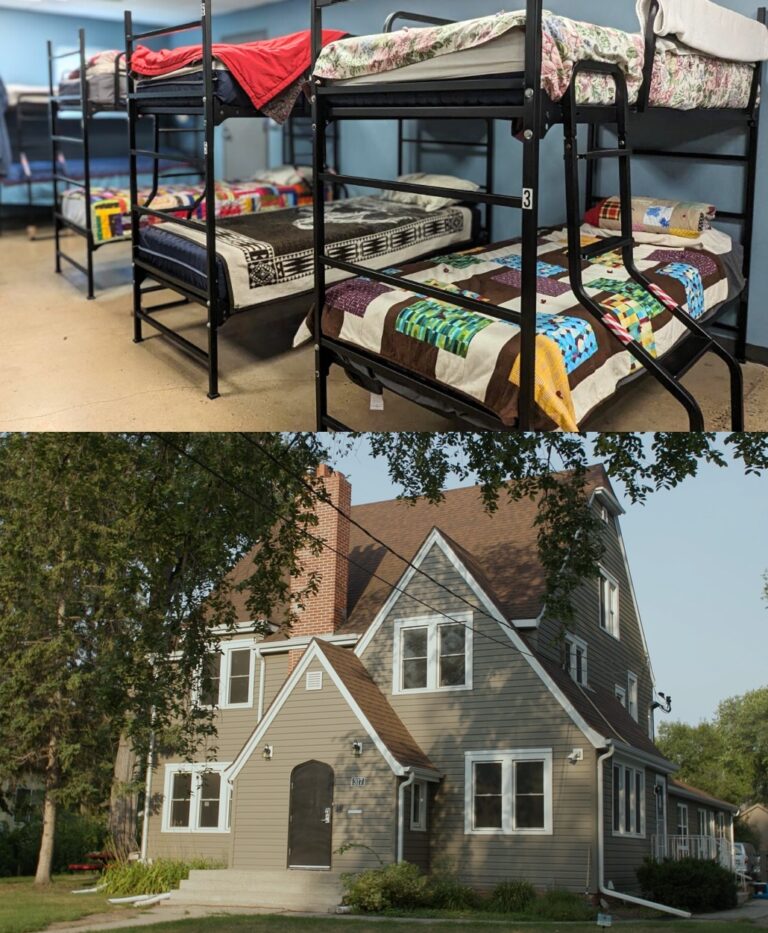
In addition to the main emergency shelter, New Life Center offers five distinct programs as part of its continuum of care:
1. Operation Hope – The newest addition to New Life Center’s services, Operation Hope is a 32-bed, low-barrier overnight shelter that functions as an entry point and way to direct the men toward some of NLC’s other programming. Sobriety is not required, but the men must check in and out of the shelter each day.
2. Harbor Program – The Harbor Program provides a setting where, alongside case managers, the men begin to identify their physical, emotional, and spiritual needs. While the bar is set intentionally low, guests are expected to follow some rules and meet certain expectations. The mantra is “safety, sobriety, and stability.” While the hope is that the men are there for 90 days or fewer, extenuating circumstances are always considered, and extensions are granted if goals are being met.
3. Genesis Recovery Program – The highest-barrier program that NLC offers, Genesis is a comprehensive, faith-based residential program for men dealing with addiction and other life-controlling issues. With 14 beds and four beds for after-care, this 12-month program delves deep into questions of: Why do you struggle with addiction? How do you build a healthy community in your life? What are the triggers that you can learn to avoid to prevent relapse?
4. Passport Program – Run in conjunction with the VA, 12 of New Life Center’s 132 shelter beds are reserved for veterans, most of whom struggle with substance-abuse and homelessness. While vets can be in the program for up to two years, the goal is to get them housed within six months. Sobriety is required, but the men are afforded more privacy and freedom to come and go as they choose.
5. Medical Respite Program – Run in collaboration with Sanford Health, seven of the shelter’s 132 beds are dedicated to men experiencing homelessness who need to recover from illnesses or injury in a more restful environment. The program is housed in a separate dorm within the main NLC building, and is staffed nearly full-time with two Sanford nurses.
“I kind of look at it as a bell curve,” says Swiers. “On the left side, you’ve got guys who maybe just lost a job, need a little bit of help, and they come through our doors and don’t ever come back. We don’t have to put a lot of effort into that end of the bell curve. At the other end of the bell curve, you’ve got what I call the ‘haters.’ They hate life, and they are just going to make it miserable for everybody around them. And those are the men who cause trouble. They hurt so bad, and they are here to inflict pain on others.
“The lion’s share, for us, are those men in the middle, who need that extra touch and a little extra support. They need that extra, longer care. And how many times are they going to be in here? Honestly, probably a few times.”
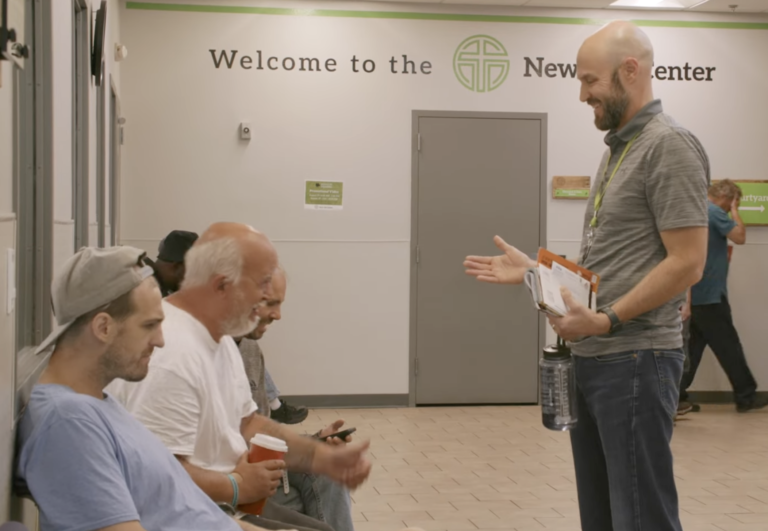
New Life Center, which provides more than 50,000 total nights of shelter and more than 150,000 meals each year, is something of an anomaly. In a world where resources for women and children are abundant, NLC stands out as one of the few area organizations focused on men — who make up approximately 60-70 percent of the homeless population nationally.
“I think guys are expected to just pull themselves up by the boot straps and suck it up,” Swiers says. “The reality is that the brokenness that men are experiencing is just as significant as women and kids, just in a different way.”
That’s why their well-earned reputation as a place a guy can go to get help is so important.
“We’ve been around a long time,” he says. “If you walk up to somebody who’s homeless on the street and ask if they’ve heard of New Life Center, I’d be surprised if anybody said no, honestly. We just have a reputation. Now, sometimes that reputation is that there are too many rules, but that’s okay. The guys have heard of us, and they know that, when they’re ready, we have a path forward for those who choose it. But you have to choose it.”
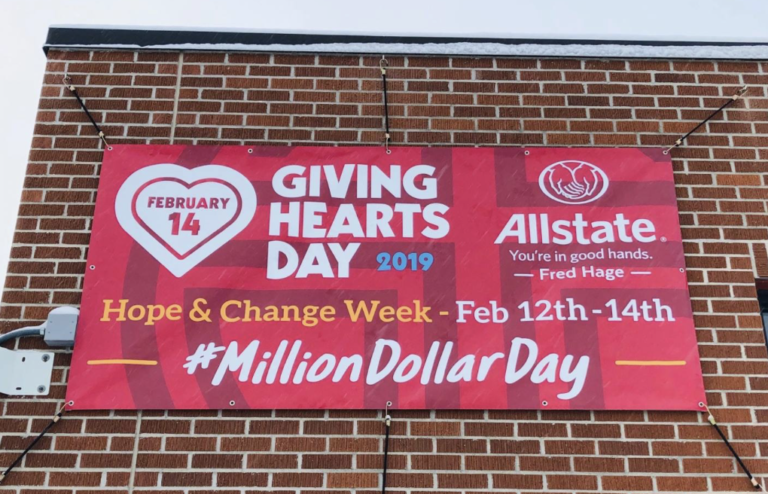
In 2019, New Life Center made history as the first charity to ever raise $1 million on Giving Hearts Day.
That distinction, along with NLC’s now-annual appearance in the top five of the large-budget fundraising category, might lead some to believe that that’s how things have always been.
On the contrary, says Swiers, who would like to take you back to 2013, the organization’s first Giving Hearts Day.
“We were hoping we could raise four grand!” says Swiers. “I think we ended up raising $37,000, and we were like: ‘What the heck just happened?!’
“When we started, we treated it like it was a 24-hour thing. We didn’t put a ton of effort into it. (Former Executive Director) Dan Danielson had his mother write the match. When I started, we had no formal fundraising or marketing plan whatsoever. We’d send a newsletter when Dan felt like sending a newsletter. There was nothing structured about it.”
Everything changed in 2018 when one of NLC’s donors convinced them they weren’t thinking big enough.
“We were going to apply for, I think it was an Otto Bremer grant,” Swiers recalls. “I don’t even remember what the dollar amount was. But (the donor) was like: ‘Why don’t you apply for $100,000?’ I said, ‘We can’t do that.’ And he said, ‘You are just as worthy as any other organization. You have to believe that.’”
New Life Center ended up getting $100,000 from Otto Bremer that year, but what they received, more importantly, was the gift of belief.
All of a sudden, Giving Hearts Day brought with it a whole new world of possibilities.
“We started setting our sights on: Could we go after half a million dollars?” Swiers says. “And so we started thinking about: How do we get to $250,000 in match to get to half a million dollars? … Half a million dollars! Crazy!
“So we were in a Giving Hearts Day meeting, and my phone rings. I had been playing phone tag with this wealth advisor, and I told the team, ‘Guys, I’m sorry, but I gotta take this call.’ So I step out, and the guy on the other end says, ‘I have a client who wants to give you $250,000.’ And it was from a donor who’d only given two gifts before of $100 and $200. (Stunned), I walk back in the room and tell the team: ‘We’re gonna get a $250,000 gift.’ And so then, we started thinking: What if we could still raise $250,000 (on the day), which means we could potentially push $1 million? No way!”
It turned out the $1 million dream wasn’t crazy after all because, not long after 11 p.m. on Giving Hearts Day 2019, NLC became the first organization to pass the seven-figure milestone.
“I remember standing out front that night,” says Swiers, “Shooting a little video, and going home. And just being exhausted.”
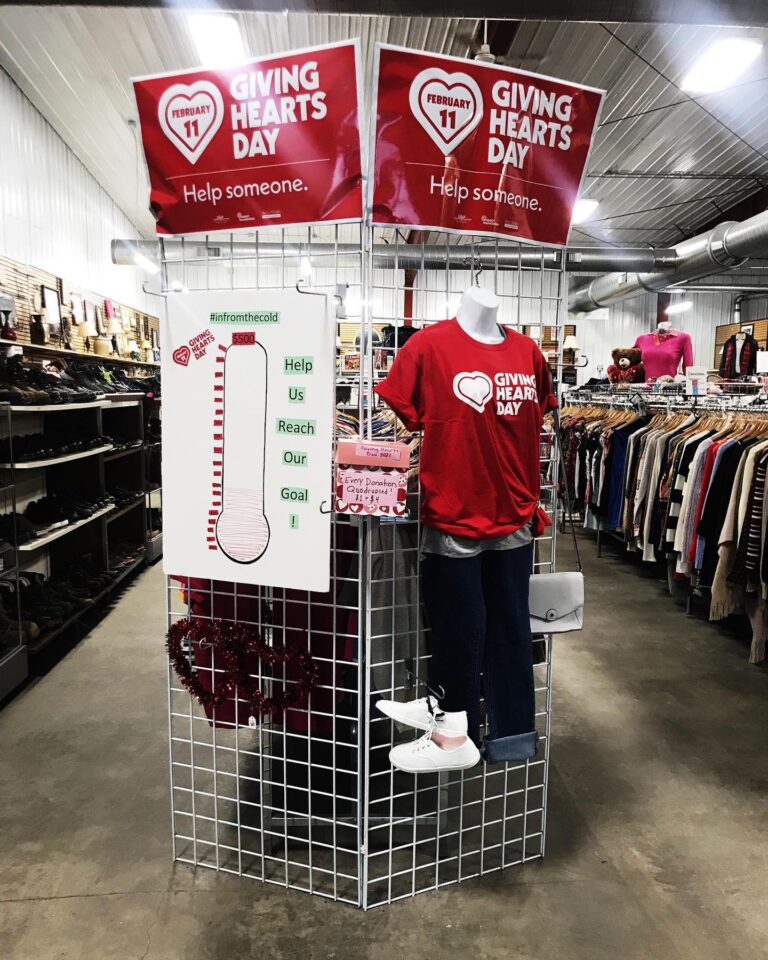
When the Giving Hearts Day results are announced each year, that’s the part that most people don’t see — the years of hard work, dedication, and donor-cultivation that it took for the top-performing charities to get to where they are.
And what’s the one thing they all have in common? They know they can’t do it alone.
“We take it seriously all the way across and all year-round,” says Swiers. “But also, we try to get as many people involved as possible. Our staff, our volunteers, even the guys at the shelter, they all know it’s happening. It’s a true community event — our staff, our volunteers, our guests, our donors, our business partners, our thrift stores. We do our best to engage them and rally around this and get everybody involved. We want to get everybody in a red shirt.”
About New Life Center
We’re facing challenges unlike any before. As the needs of those experiencing homelessness grow and essential resources shrink, one question remains: Where will people turn when help is taken away? At New Life Center, men who arrive weary and broken find more than shelter. They find stability, healing, and renewed purpose. Each guest represents a story of hardship and hope. A warm bed. A hot meal. A second chance. For those who’ve lost everything, these are life-saving acts of care.