St. Gianna & Pietro Molla: An Oasis for Women in Their Greatest Time of Need
Friday, 12 Jun 2026
When 16-year-old Jenna showed up on Mary Pat Jahner’s doorstep more than 20 years ago, her situation was dire.
“She’d gotten pregnant unexpectedly, and there was pressure from all over the place,” says Hayley Kaffar, communications director for St. Gianna & Pietro Molla Maternity Home. “(She had people telling her) ‘You’d be a fool if you kept this baby.’ But deep down in her heart, she knew she wanted to keep and parent her baby. When she came to the home, it provided a refuge from this dangerous situation she was in, and she could feel the peace and calm that she needed to reclaim her dignity as a woman of God.”
Jenna was one of the first women to walk through the doors of the Gianna home, which Jahner and a local priest founded in 2003.
“There was no Catholic organization in North Dakota that could serve moms who are experiencing unexpected pregnancies,” says Kaffar, “And she saw that they had nowhere to go for help. (For many), abortion was the only option. Mary Pat said: ‘We have to fill this gap and be there for these moms.’”
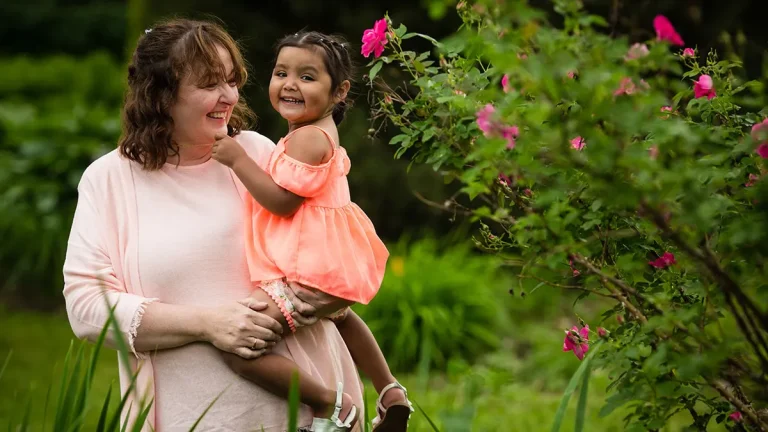
Mary Pat Jahner (left) is the founder of St. Gianna & Pietro Molla Maternity Home. Here she is pictured with her adopted daughter, Aubrey, who is one of the more than 150 babies born at the home since its opening in 2003.
So that’s what Jahner did.
She resigned from her teaching job at Shanley Catholic High School in Fargo and, with the help of Father Damian Hils — who was the priest in rural Warsaw, North Dakota — determined that a dilapidated building would become the future home of St. Gianna & Pietro Molla Maternity Home. The three-story brick structure, which had previously been a school and a living space for a group of Catholic nuns, had good bones but had been neglected over the years.
For Jahner and her fledgling mission, it was more than enough.
Kaffar, who’s been involved with the Gianna Home from the beginning, remembers those early days well.
“I was 14 or 15, and I remember going to this little home where Mary Pat lived, and she and my mom (a long-time board member) were basically figuring all of this out from the ground-up,” Kaffar recalls. “Starting from nothing and having to figure out how to establish this nonprofit organization and figure out all the ins and outs. There were so many hoops they had to jump through.”
For Kaffar, it was the beginning of a life-long reverence she has had for Jahner and “her heart of service.”
“I just remember thinking: ‘What kind of woman wants to dedicate her life to this?’” Kaffar says. “It was so beautiful.”
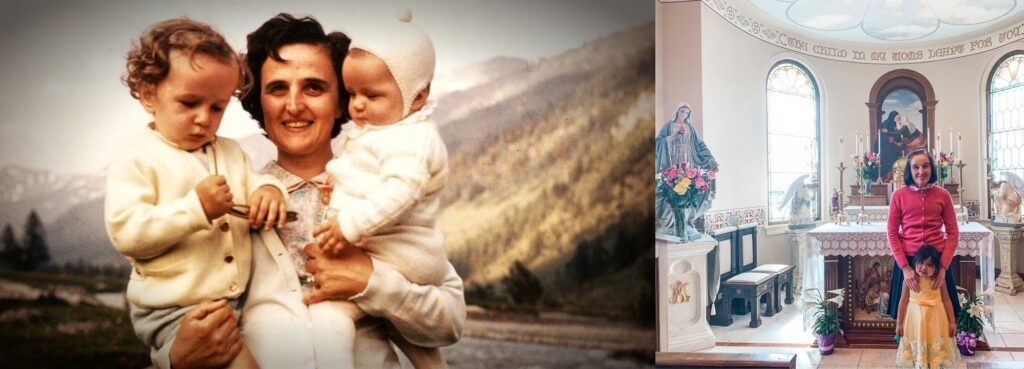
Pictured left: In the 1960s, Gianna Beretta Molla developed a uterine tumor during her fourth pregnancy. Although recommended by doctors, she refused both an abortion and a hysterectomy during her pregnancy in order to preserve the child's life. Her name, along with her husband's name, Pietro, now adorn the St. Gianna & Pietro Molla Maternity Home in Warsaw, North Dakota. Pictured right: St. Gianna's fourth child, Gianna Emanuela, has visited the North Dakota maternity home on numerous occasions and has developed a close friendship with Founder Mary Pat Jahner.
For Jahner, though, she’s really just following in the footsteps of the maternity home’s namesake.
Gianna Molla was an Italian pediatrician and mother of three who, while pregnant with her fourth child in the early 1960s, was diagnosed with a uterine tumor. Because the tumor posed a grave threat to Molla’s life, doctors recommended a total hysterectomy and abortion, an idea she was not willing to entertain.
“Back in the ‘60s, they didn’t have the treatments and capabilities that we have today,” Kaffar explains. “Today, if the same thing would happen, everything would likely turn out fine. Nobody would die. But back then, because of this tumor, the doctor basically said: ‘You should probably terminate your pregnancy because somebody’s going to die here. Either the baby’s not going to make it, or you’re not going to make it. Or both.’
“And Gianna said: ‘Nope, I’m not doing that. I’m going to finish this pregnancy. I’m going to give birth. It’s in God’s hands.’ So she went full-term, gave birth to a baby named Gianna Emanuela, and ended up dying about a week after she gave birth (due to an infection). She sacrificed her life so that her baby could live, which is kind of the mantra of the pro-life movement and of the Gianna Home: I unexpectedly became pregnant with this baby, and I’m going to set aside my own plans and my own (well-being), and I’m going to give this baby life.”
St. Gianna — as she’s now known following her canonization in 2004 — and her husband, Pietro, were the perfect role models for what the Gianna home has to come to stand for over the past 23 years.
At St. Gianna & Pietro Molla Maternity, their stated mission is clear: "We believe every unborn child is a gift from God and has a right to life, and every pregnant woman has the right to give birth with dignity."
“We’re not just about a single mom and her baby,” Kaffar says. “Our mission is serving one mother, one baby, one family at a time. It’s everybody. Because everybody is worthy of love, dignity, and respect in life.”
The home, as Kaffar explains, is about quality over quantity. While no more than 2-4 mothers and their children occupy the home at a given time, when the women and their children are in residence, the emphasis is on providing them with the best possible experience while they are expecting.
“It’s basically a typical household,” says Kaffar, who adds that there are typically three housemothers who live on-site and offer additional support to the women. “They’re getting up in the morning, having breakfast together. If the moms are still in school, they’re going to school and then possibly extracurriculars. They’re having meals together, going to doctor appointments.
“It’s very focused on: Let’s do everything together. Let’s go grocery shopping together. Let’s make meals together. (A lot of) these women don’t have that family foundation. Oftentimes, the women come from experiences of dysfunction and disorder, so we’re just trying to bring stability to these women’s lives. And trying to help them to learn and recognize what it’s like to live a stable, normal family life in hopes that they can continue that when they leave the home.”
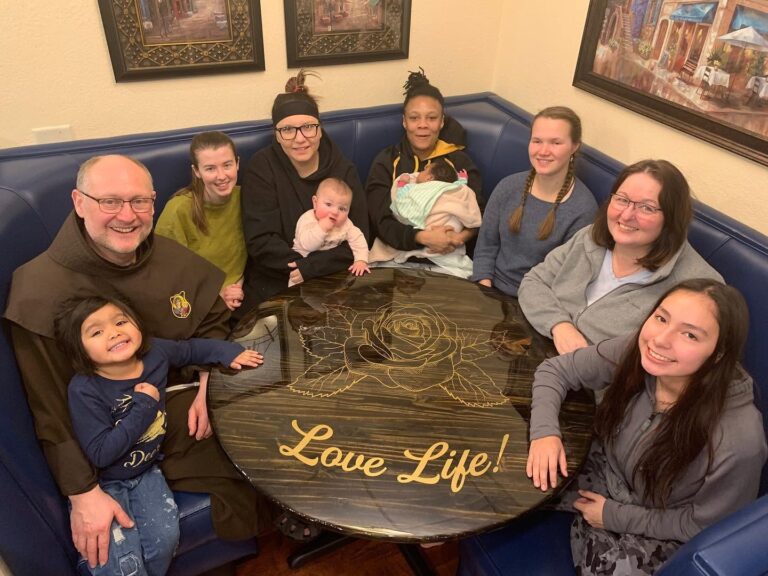
An essential part of the St. Gianna ministry is living together as a family. At any given time, about 12-15 people live at the home (including live-in housemothers), and they try to do everything together, says Communications Director Hayley Kaffar. From baking cookies to going on bike rides to running errands, Gianna Home residents and staff move and live together as a familial unit.
One of the ways they attempt to create that stability is by introducing an element of faith and religious observance to the women’s lives.
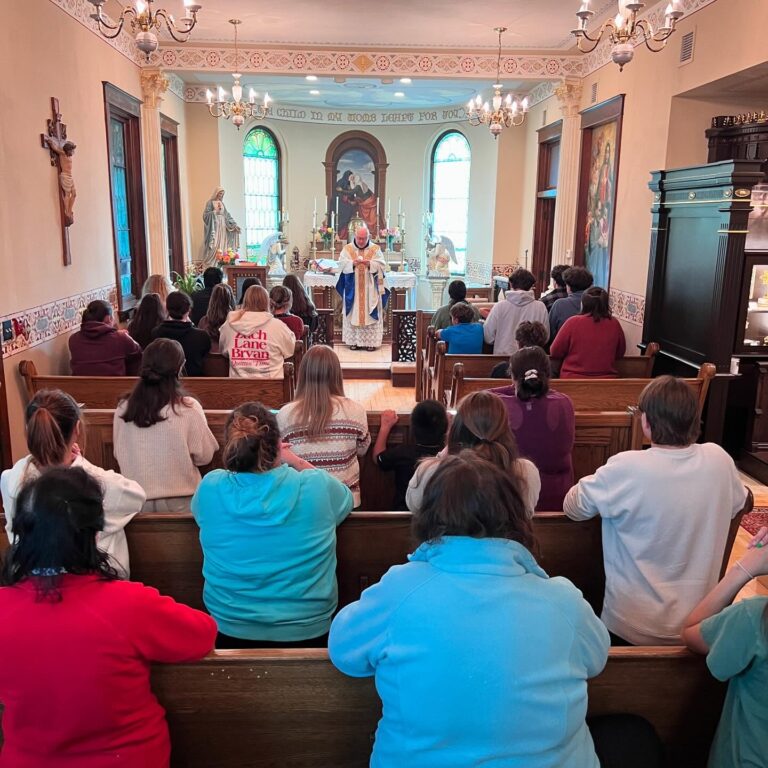
“Women of any faith or no faith are welcome to live in the home,” says Kaffar, “But we also have very set things that we do on a day-to-day basis — boundaries that they have with men, using phones, things like that. The safety and well-being of the women are the highest priority. We require our moms to attend Sunday Mass with us, but if they are practicing another faith, we do our best to make arrangements for them to attend another Christian service as well.
“We don’t want anyone to ever feel judged or forced to do anything, but I will say there are many situations where women — who maybe never had any formation of any kind — come to be inspired to love the Lord, and some even join the Catholic Church. That’s a very important part of our ministry.”
While all the women who stay there do eventually leave the home — whether after a few months or sometimes up to a couple years — none of them actually ever truly “leave” the home, as Kaffar explains.
“We continue to support moms and their children like family, even after they leave the home,” she says. “Whether it’s practical needs as they arise such as groceries, household items, gas cards, home bills. Or even hosting weddings or helping to babysit.”
Gianna Home residents and families attend Mass together each Sunday in the on-site chapel or in the neighboring St. Stanislaus Catholic Church.
Despite operating in a community of only about 100 people and having no dedicated fundraising person on their team, the Gianna home continually punches way above its weight each year on Giving Hearts Day. This year was its third consecutive year raising more than $400,000, which is more than half of their annual operating budget.
When asked what their secret sauce is, predictably, Kaffar and the St. Gianna team give credit to forces beyond themselves.
“We pray a lot,” she says. “It shocks us every year, too. We just always say it’s divine providence. We don’t get it because honestly, we’re kind of just half winging it. We don’t have this proven method or strategy.
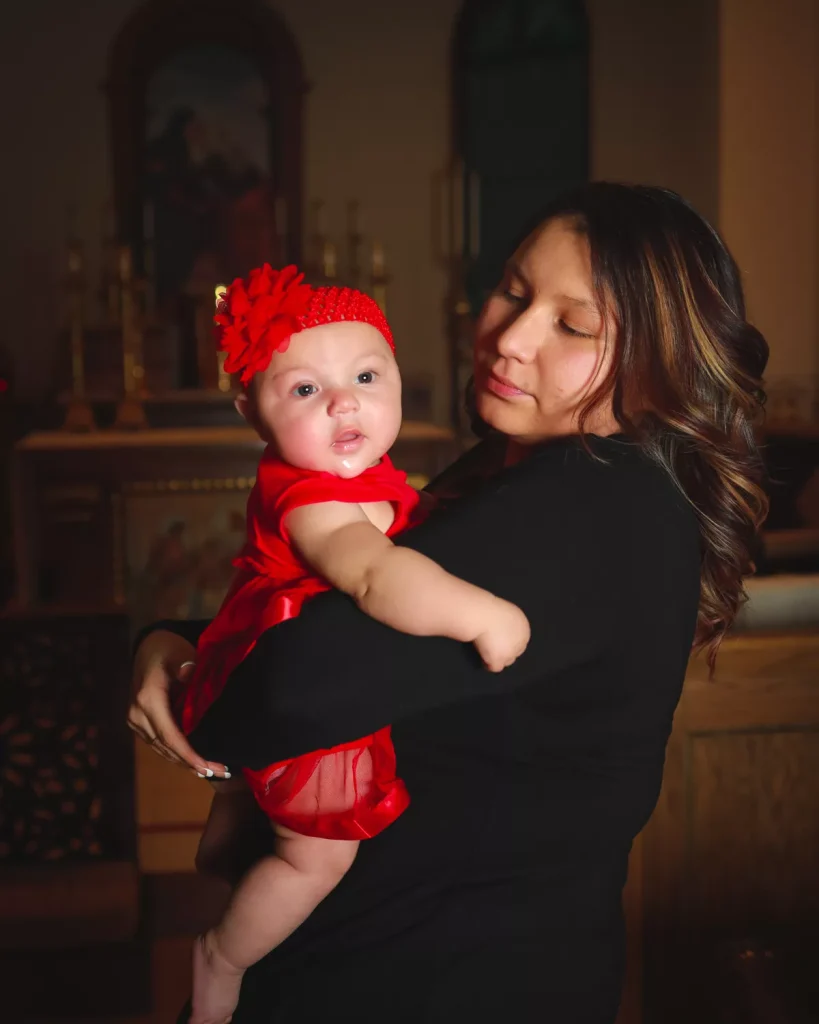
“It’s a lot of trial and error, but I think you just have to speak to your audience in terms of how you create your campaign. People love pregnant women and babies. All you have to do is post some cute pictures of babies online and people are like: ‘Oh my gosh, I want to give you all my money.”
She says they’ve also been able to take advantage of a huge network of supporters that exists beyond just North Dakota and Minnesota.
“Last year, we got a donation from all 50 states,” Kaffar says. “It just seems like somebody knows somebody who knows somebody who knows somebody. And it’s just such an easy cause to give to. There’s no definitive answer for the success of our Giving Hearts Day campaigns over the years. It’s all a miracle, and we are so grateful.”
Asked what role Giving Hearts Day plays in funding St. Gianna & Pietro Molla Maternity Home's mission, Founder Mary Pat Jahner says: "Most years, (Giving Hearts Day) is at least half of our annual budget, but it also helps with special projects. It is a huge gift and is the heart of all of our fundraising efforts."
Kaffar says that, for the foreseeable future, the Gianna home has no plans to expand beyond its current footprint in Warsaw — as Jahner puts it, “We like what we do, and we do it well” — but that doesn’t mean those GHD dollars aren’t being put to good use.
This summer, they’re breaking ground on a major construction project on the east side of their building, and down the road, the dream is to build both an on-site wellness facility and residential apartments that will help the women more effectively transition into independence. They’d also like to add on-site counseling services.
While support for St. Gianna’s is currently at an all-time high, Kaffar says they try to never take their good fortune for granted.
“The Gianna home is such a specialized ministry,” she says. “It’s like a one in a million thing.”
And regardless of what the future brings — whether it’s changing tides in politics, funding, or leadership — one thing will always remain certain: Pregnant women will always have a home at St. Gianna & Pietro Molla Maternity Home.
About St. Gianna & Pietro Molla Maternity Home
At St. Gianna & Pietro Molla Maternity Home, any mother of any age experiencing a crisis pregnancy will find love and support in a spiritual and family-type environment. SGPM Maternity Home offers a beautiful home to live in, clothing, assistance with doctoring, and educational opportunities including the chance to learn job skills and parenting skills. With God’s grace, good things can come from even the most difficult situations. Sometimes expecting a child can be overwhelming, especially if a mother is not getting the support she needs from family members or from the father of the child. The Gianna Home believes that every mother deserves to give birth with dignity and respect. Their staff is here to stand by all mothers so that they can find the right solutions for themselves and their children. Women of all faiths are welcome.