YWCA Cass Clay: The Neighbor We Need

Wednesday, 15 Jul 2026

When Rayonna Hystead was profiled at a YWCA Cass Clay event two years ago, the title of the video told a story unto itself: “From Resident to President.”

Hystead, a wife and mother of two, was serving as the YWCA board president at the time, but unbeknownst to many in the room, she’d actually been a resident of the organization’s Emergency Shelter 20-some years earlier when she was a child — twice, in fact. The story she told about her experiences with domestic violence, foster care, and abuse was harrowing, but it was also something else: It was a testament to what’s possible when a community steps up to help its neighbors. She was living proof.

While Hystead’s story had a happy ending, it started out as anything but. She was the daughter of one of the 1 in 4 women in the U.S. who will experience violence at some point in their life, a sobering statistic that YWCA Cass Clay CEO Erin Prochnow says shocks most people the first time they hear it.

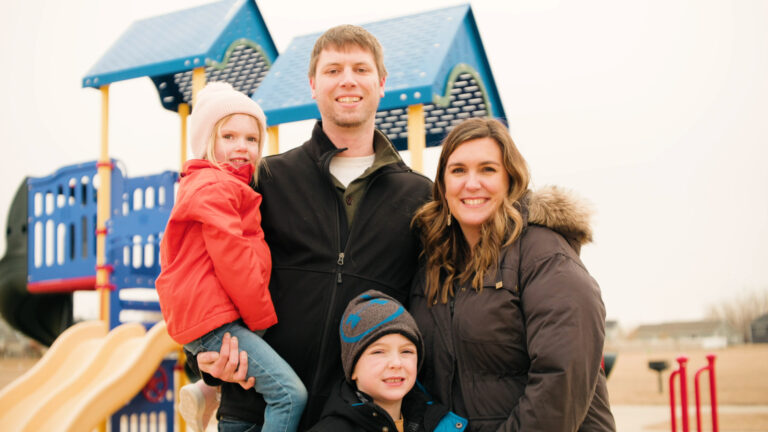
Rayonna Hystead (pictured right) is the ultimate YWCA Cass Clay success story. Her first exposure to the organization came as a 4-year-old resident at the YWCA Emergency Shelter. Now, as a grown mother of two, she is a YWCA ambassador, volunteer, and former board president. "Im grateful for my family, I'm grateful to be a mom," says Hystead, who credits YWCA with providing her with stability at a time in her life when she had very little. "I get to provide a life for my kids where not a single day in their life do they worry about where their food is going to come from. I'm proud that I get to have a job that I love, and I'm proud of my relationship with my husband."

“When I go out and do a public speech to a service club or organization, one of the things I talk about is how many domestic violence calls there are at Red River Regional Dispatch Center in just a single day,” Prochnow says. “The average last year was 11 calls per day. And that’s just for domestic violence, and that’s just the ones who actually called. Most people would say: ’11 calls a day?! In our community?!’ People just think it doesn’t happen.

But it does happen. And that’s why, since its founding in 1906, YWCA Cass Clay has been such an essential resource for women throughout the region.

Established in Fargo in the early 20th century as an outgrowth of the Women’s Christian Temperance Union, by the 1920s, the organization was housing hundreds of women each year in a home on the north side of town.

“Our role in the community is really rooted in the housing of women,” says Prochnow, who’s led the YWCA Cass Clay for the past 18 years. “Whether they were coming to the community of Fargo-Moorhead to receive an education before dormitories existed — so that their families felt like they were safe — up to, in 1978, when we opened the Emergency Shelter, our roots have always been providing housing to women.”

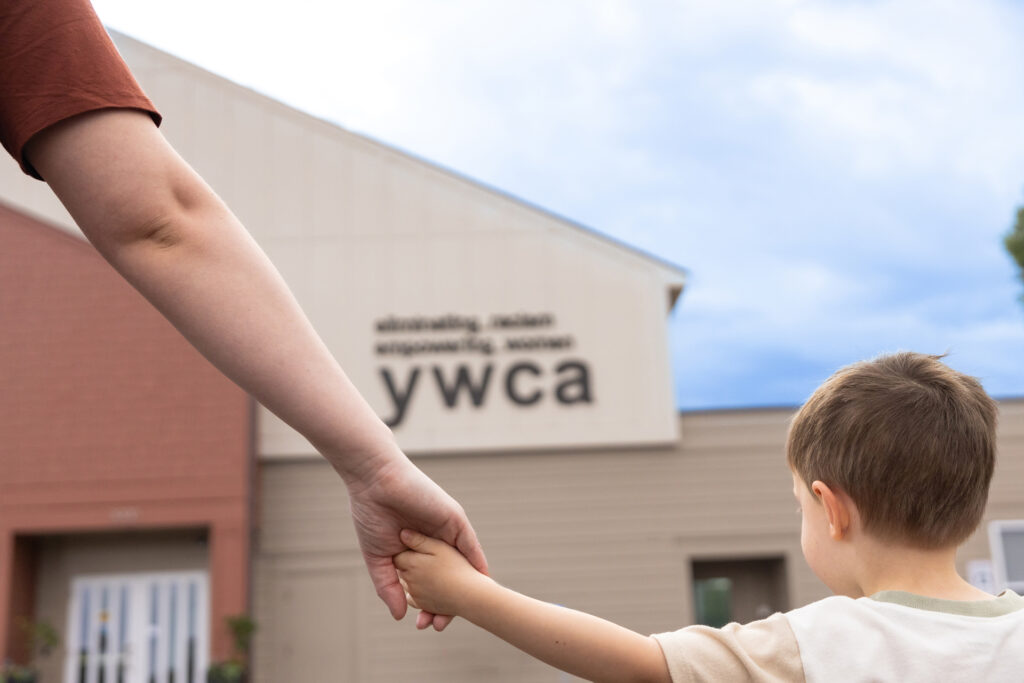
YWCA Cass Clay was established in Fargo in 1906 as temporary housing for women moving from rural communities looking to secure an education in the city. 120 years later, YWCA continues the work of empowering women to build brighter futures for themselves and their families.

The opening of its 24-hour Emergency Shelter nearly 50 years ago was a pivotal moment for the organization, as it has become the largest shelter of its kind in North Dakota and northwest Minnesota. In 2025 alone, the Shelter provided more than 25,000 nights of shelter to more than 1,300 women and children — 91 percent of whom were survivors of domestic violence. 

“We assist women and children who are fleeing violence and experiencing homelessness,” says YWCA Empowerment Coach Morgan Nordheim. “Our Emergency Shelter is somewhere that people can come to if they are needing safety.”

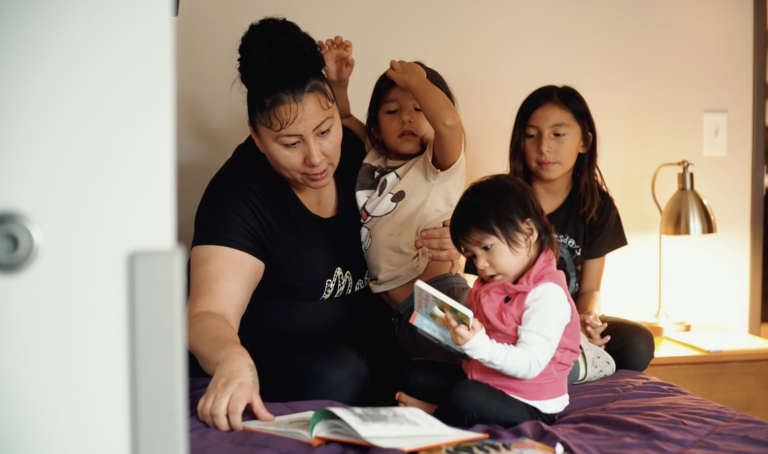
Former YWCA Emergency Shelter Resident Kelley (pictured far left) with her children. Following her time at the Shelter, Kelley said simply: "Without that place, I don't know where I'd be. I felt like a mom again. I felt whole."

One of those women, Kelley, credits YWCA Cass Clay with helping her get her life back on track after she fled an abusive relationship and struggled with addiction. 

A single mother of five, Kelley came to the shelter with nothing but the clothes on her back and a stroller.

“I was bouncing around from house to house, couch to couch with my daughter,” says Kelley. “We didn’t have a place to go (or) a place to turn … I didn’t have family at the time. The family I did have was using. I just felt like I was a nuisance. I felt stuck. I felt hopeless.”

After visiting a few different area shelters, when Kelley found YWCA, she could tell it was different.

“I felt relieved when I first stepped in here,” Kelley says. “They showed me around, and it felt warm. It felt welcoming, and I wasn’t alone. I’d never had support like that before.

For Kelley and many other women like her, the YWCA isn’t just a temporary roof over their head and a hot meal. It’s a place where, with the help of the YWCA staff and Supportive Services, they are able to lay a solid foundation for long-term success.

“YWCA (Supportive) Services are the stepping stones to help our participants meet their goals,” Nordheim says. “We are able to sit down and make a plan of what their end goal looks like and all the things it would take to get them there. We have classes every single month on a variety of topics such as job prep, building resumes, all of the essentials leading up to finding that job that they’re looking for.”

For Kelley, that started with getting a driver’s license, which allowed her to purchase a car and regain her mobility and independence. She was able to secure a job, and, thanks to the YWCA’s Supportive Housing Program, a home for her and her family.
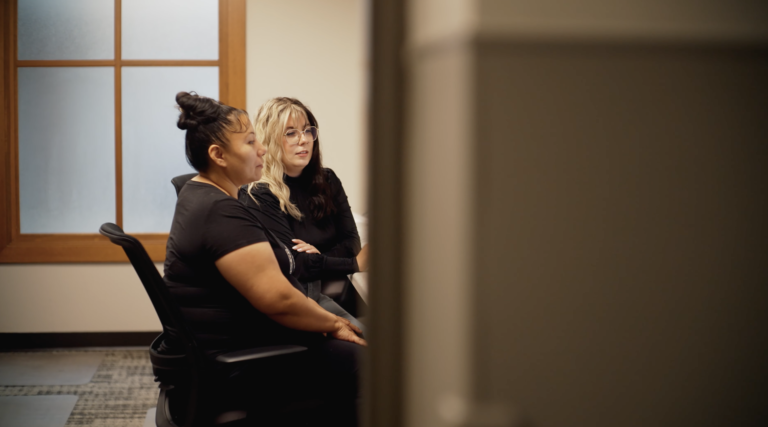
When Kelley (pictured left) first arrived at the YWCA Emergency Shelter, she had no driver's license or form of ID, which is a tactic often used by abusers to maintain control. In fact, 70 percent of women arrive at YWCA without personal documents for themselves and their children. "That impacts finding employment, opening up a bank account," says YWCA Empowerment Coach Morgan Nordheim (pictured right). "You need identifying documents for everyday life."

While the Emergency Shelter is the thing for which YWCA Cass Clay is best known, its Supportive Housing program is the area that’s seen the most expansive growth over the past decade-plus. And for good reason.

“We were seeing women come back into the shelter again and again,” Prochnow says. “Because they didn’t have anywhere to go. They didn’t have solid credit, they didn’t have jobs, they didn’t have all these things. So, they had no other choice but to stay in the cycle. And we all just said: Enough. Let’s end the cycle.”

The YWCA Supportive Housing Program, which is a proven and cost-effective strategy for breaking cycles of violence and homelessness, has been around for decades, but as they continued to realize just how few units were available locally, they took matters into their own hands. 

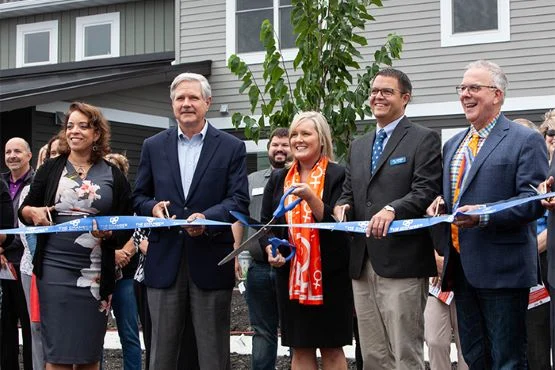
YWCA CEO Eric Prochnow (pictured middle) flanked by North Dakota Sen. John Hoeven (pictured second from left) and former Gate City Bank CEO Steve Swiontek (pictured far right), both of whom were instrumental in the creation of Grace Garden.

“At the time (in 2015), we had 18 units of housing,” Prochnow says. “Our goal was to double the size of our Supportive Housing program in the next five years.”

Thanks to generous donors, community business partners, and a dedicated team, YWCA Cass Clay met that goal and has since far surpassed it. They now have 97 units of safe, affordable short- and long-term supportive housing across the Fargo metro, including:

  • Grace Garden: A 30-unit permanent supportive housing apartment complex in West Fargo that prioritizes domestic-violence survivors who are experiencing homelessness for the first time. Because these individuals often find themselves lower on priority lists for housing than individuals who are chronically homeless, YWCA and its partners addressed this need by prioritizing these individuals.
  •  Lantern Light: The renovated Sacred Heart Convent now houses 23 units, as well as YWCA’s Permanent Supportive Housing team, a technology center, community spaces for classes and gathering, and a playground.
  • Cove Lane: Purchased from the Sisters of the Presentation in 2023 — with renovations completed a year later — the 13-unit Cove Lane is conveniently located near the YWCA Emergency Shelter. This affords residents easy access to childcare, education and employment programming, and health services.
YWCA Cass Clay addresses the root causes of poverty and helps lift entire families out of generational poverty through its Supportive Services and Supportive Housing programs. Their model helps break down barriers, foster achievement and belonging, and support families where they are in their journey.

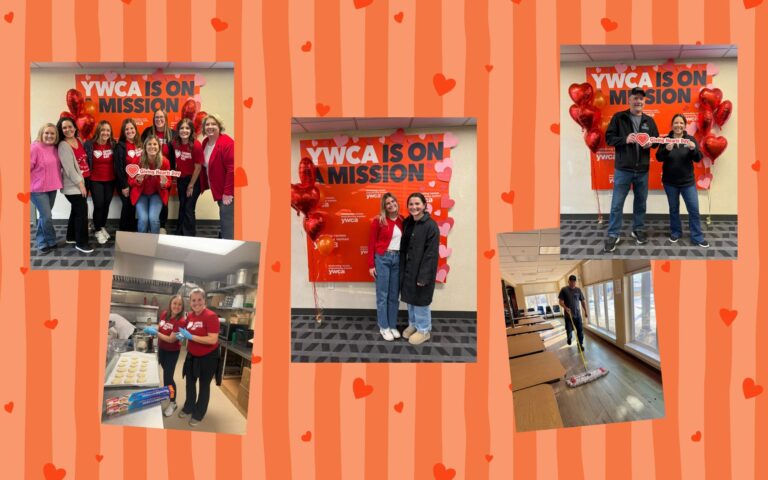
At a time when funding sources the YWCA has long relied on are in doubt, fundraising events like Giving Hearts Day have become more crucial than ever for the organization.

“The questions we’ve had to ask ourselves is: Where does Giving Hearts Day — and really philanthropy generally — come in?” Prochnow says. “How do we best utilize the donor dollars that we receive and pair them with other funding sources that are available? At least in normal environments.

“What I’d tell you today is that we’re not operating in what I would consider a normal environment from the federal scope. Because I see long-standing funding in jeopardy that was never in jeopardy before. And Giving Hearts Day obviously is a huge portion of those goals we need to implement in our strategy.”

With uncertainty around federal dollars unlikely to be resolved anytime soon, YWCA Cass Clay has made a concerted effort to maximize its Giving Hearts Day performance. The organization is currently on a four-year run of raising more than $1 million on the day, raising nearly $1.3 million on GHD 2026. 

When thinking about fundraising and Giving Hearts Day, YWCA Cass Clay CEO Erin Prochnow says she still leans on a piece of advice she got from Impact Foundation fundraising coach Jim Holdman nearly 20 years ago: "What we need to do is help the community understand what they would lose if we weren't here. And at YWCA, 350 women and children are either sheltered or housed every night in our community. And so what would the community lose if the YWCA weren't here? Where would those 350 women and children be every night if it weren't for the generosity of our community funneled through this long-standing organization that's been in our community for 120 years?"

For Prochnow, YWCA’s approach to Giving Hearts Day — and the steady growth they’ve seen since participating in the first GHD 19 years ago — is really just an extension of the approach they take to everything they do.

“We pay attention to the details,” she says. “Make it routine. Make it a part of what you do. Make it a process. And pay attention to it weekly at your development check-in or donor-focused staff meeting.

“We talk about processes all the time in every facet of what we do. What’s the process for taking in a new client in the Shelter? What’s the process for inspecting an apartment unit in our Supportive Housing program? What’s the process for our credit card receipt policy? All of these things are delineated and very purposeful because we want to be here and sustaining, and there isn’t room for error. I think, sometimes in nonprofits, people think: ‘Oh, you’re just bleeding-heart do-gooders.’ But if you’re going to run a solid nonprofit, you need to have a business acumen where you look at the bottom line.”

For fellow Giving Hearts Day charities that hope to one day be where YWCA is, she recommends strategic, steady growth over magic bullets:

“It can be really overwhelming to attempt to do it all overnight and say: ‘We need to host this’ or ‘We need to do this’ or ‘We need to be better at this.’ Instead, figure out what are your goals and how do you lay them out and what could you actually get accomplished?

“It’s great to set lofty goals because we all need to aim for something higher and bigger. But the reality is that your goals also need to be achievable so that those of us in the trenches doing that work don’t feel defeated and like we can’t ever obtain it. And so, from us, you’ve seen incremental growth on purpose because we, as an agency, have incrementally grown.”

To learn more about YWCA Cass Clay and to give, click here.

About YWCA Cass Clay

YWCA Cass clay operates the largest emergency shelter for women and children in North Dakota and northwest Minnesota, providing 24/7 safety and support for 1,300 individuals annually escaping domestic violence and homelessness. Beyond providing safe shelter, YWCA Supportive Housing provides stability to more than 320 adults and children each year through 97 units of safe, affordable housing for the longer journey to empowerment and independence. Through trauma-informed care and client-centered programs for health, employment, and education, YWCA empowers survivors and their children to heal and thrive.